You have seen “boi” everywhere from TikTok comments to business news—but what does boi mean, and how is it actually used in everyday language?
Depending on where you see it, the term has five distinct meanings:
- Playful Slang: A casual, fun alternative spelling of “boy” used in texts and internet memes.
- LGBTQ+ Identity: A term for masculine or boyish queer people, with roots in communities of color.
- Welsh Greeting: An informal term of address in North Wales, similar to “mate” or “buddy.”
- BDSM Community Term: A word for a male submissive or bottom in alternative lifestyle spaces.
- Business Acronym: Short for Beneficial Ownership Information, a legal finance term tied to FinCEN reporting.
Which meaning applies to you?
- Saw it in a text, meme, or comment? It is almost certainly playful slang.
- Saw someone use it as their gender identity? It refers to the LGBTQ+ definition.
- Heard it in North Wales? It is a friendly regional greeting.
- Saw it on a corporate or government form? It is the business acronym for Beneficial Ownership Information.
The 5 Main Meanings of BOI
Understanding the word comes down to context. The word “boi” sounds identical to “boy,” but its meaning changes completely based on who is speaking and where you read it.
- Playful Slang: A friendly, informal way to spell “boy” in texts, online chats, and memes.
- LGBTQ+ Identity: Describes masculine, nonbinary, or boyish queer individuals.
- Welsh Greeting: Used in North Wales as a friendly greeting meaning “mate” or “friend.”
- BDSM Role: Refers to a submissive partner in specific subcultures.
- Business Term: An official acronym for Beneficial Ownership Information used by the U.S. government.
BOI as Slang: Playful Spelling of “Boy”
In daily texting and social media posts, “boi” is a popular alternative spelling of “boy.” People use it to change the tone of a message. It makes sentences feel lighthearted, funny, or casual.
What Does “Boi” Mean in Texting and Social Media?
When someone uses “boi” in a text, they rarely mean a young child. Instead, it serves as an emphatic or playful word choice. It shows affection, teasing, or excitement.
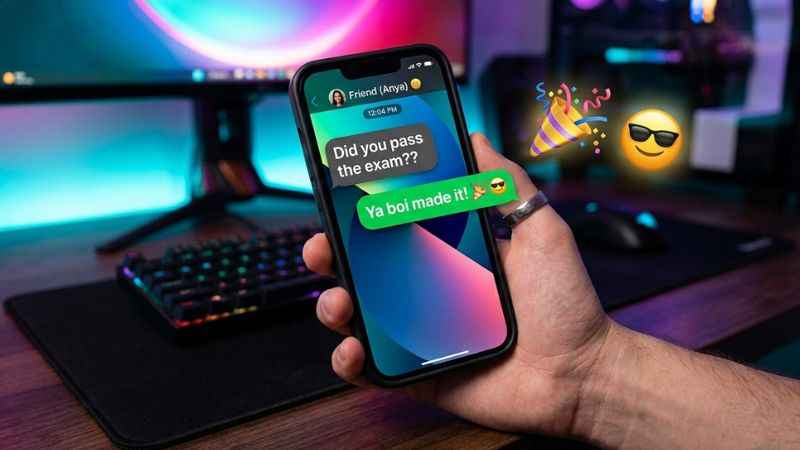
You will often see it combined with other internet slang words:
- Ya boi: Means “your boy,” but usually refers to oneself (e.g., “Ya boi just passed the test!”).
- Dat boi: A reference to a classic meme, or a fun way to point out a friend.
- Smol boi / Long boi: Popularized by animal memes to describe small or unusually long pets.
| Aspect | Boy | Boi |
| Spelling | Standard English | Deliberate internet spelling |
| Tone | Neutral or formal | Playful, affectionate, humorous |
| Context | Everyday life, professional writing | Text messages, social media, memes |
| Pronunciation | /bɔɪ/ (boy) | /bɔɪ/ (Same as boy) |
| Origins | Standard English | AAVE, skate culture, internet memes |
Where Did “Boi” Slang Come From?
The slang spelling grew popular through several pop culture waves:
- Early 1990s: Rapper Big Boi (of Outkast, formed in 1992) adopted the spelling. Mid-to-late 1990s: Skateboarding, rave, and emo scenes adopted the term.
- 2002: Avril Lavigne’s hit song “Sk8er Boi” pushed the word into mainstream pop culture.
- 2010s: Meme culture took over. The “Dat Boi” meme (a green frog on a unicycle) went viral on Tumblr, Twitter, and social media.
- 2020s: Social media platforms like TikTok, Instagram, and Snapchat turned it into everyday vocabulary.
Real Examples: How “Boi” Is Used in Conversation
Here is how the slang looks in real conversations:
- Example 1 (Playful teasing):“Hey boi, did you really forget your phone again?”
- Context: Friendly banter between close friends.
- Example 2 (Excitement):“That’s my boi! I knew you’d land that job!”
- Context: Encouraging a friend or celebrating their success.
- Example 3 (Self-reference):“Guess who just bought pizza for everyone? Ya boi.”
- Context: A lighthearted way to refer to yourself in the third person.
BOI in LGBTQ+ Communities: Identity and Meaning
Outside of casual internet slang, “boi” carries deep cultural significance within LGBTQ+ spaces. In this context, it is not just a cute misspelling. It is a specific term used to describe gender identity and presentation.
What Does “Boi” Mean in LGBTQ+ Context?
In LGBTQ+ spaces, “boi” describes someone with a masculine or boyish gender expression, energy, or presentation.
The spelling “boi” traces to AAVE usage in Black communities in the early 1990s, but the term was adopted concurrently by multiple subcultures in the mid-to-late 1990s including skateboarding, emo, LGBTQ+, and BDSM communities. In AAVE, the term was historically pronounced “boy-ee” or “bou-oy,” though in most contemporary usage (slang and identity), it’s pronounced identically to “boy.” It provided a term for individuals who felt standard gender labels like “girl” or “woman” did not fit them, but who also did not fully identify as traditional cisgender men.
Who Uses the Term “Boi” as an Identity?
People across the queer spectrum may use this label. It is commonly adopted by:
- Boyish lesbians or butch women who feel connected to a youthful, masculine energy.
- Transmasculine individuals who are early in their transition or prefer a boyish presentation.
- Nonbinary people who express masculinity outside traditional binary gender roles.
- Younger gay or bisexual men who present with effeminate or youthful traits.
Pronoun preferences vary for people who use this label. A boi might use he/him, they/them, she/her, or neopronouns. Always ask a person’s preferred pronouns rather than guessing based on their identity label.
Boi vs. Butch: What’s the Difference?
While both terms relate to masculine expression in queer culture, they have different histories and meanings:
| Aspect | Butch | Boi |
| Historical Roots | Mid-20th century lesbian culture | 1990s AAVE and queer communities of color |
| Gender Association | Traditionally associated with lesbians/women | Broader: includes nonbinary, trans, and queer men |
| Vibe / Energy | Mature, solid, traditional masculinity | Youthful, boyish, playful, lean energy |
| Usage | Often tied to butch/femme relationship roles | Used as a personal identity or stylistic expression |
Cultural Sensitivity: Can Anyone Use “Boi”?
Because the term has roots in AAVE and queer communities of color, thoughtful usage is important.
- When it is fine: Describing your own identity, using well-known memes (“dat boi”), or using casual slang with close friends.
- When to avoid it: In professional work environments, when describing strangers without knowing how they identify, or using it in a mocking tone.
Respect the cultural weight of the word. Recognize that while it functions as silly internet slang in some spaces, it represents a meaningful identity in others.
BOI on Social Media: TikTok, Snapchat, and Instagram
Social media apps use “boi” in very specific ways. Each platform leans toward a different aspect of the word.
What Does “Boi” Mean on TikTok?
On TikTok, “boi” usually appears in video captions, text overlays, and audio trends.
- POV Trends: Creators use “POV: you’re the boi” to portray specific character archetypes or joke about friend dynamics.
- Affectionate Terms: Videos explaining “what it means when a girl calls you boi” often break down subtle signs of flirting versus friend-zoning.
- Pet Content: TikTok users frequently label dogs and cats as “good boi,” “sad boi,” or “chonky boi.”
Boi Meaning on Snapchat and Instagram
Snapchat users rely on “boi” as quick texting shorthand. It replaces “guy,” “man,” or “bro” in direct messages between friends.
On Instagram, “boi” lives primarily in photo captions and meme accounts. People post outfits with captions like “ya boi cleaned up today,” or tag friends in comments using the phrase.
What Does It Mean When a Girl Calls You “Boi”?
If a girl sends you a text or says “hey boi,” her intent depends entirely on your relationship and tone:
- A Friendly Nickname: She views you as a close, comfortable friend.
- Flirty Energy: If accompanied by teasing or flirty emojis (like 😉 or 😏), it serves as a cute nickname similar to “babe.”
- Group Context: She is addressing you as part of her wider social circle (“one of the bois”).
- Meme Humor: She is making a joke or referencing a trending video.
Look at the surrounding conversation. If her messages are warm and frequent, it is likely a sign of affection or casual flirting.
BOI in Welsh: Regional Greeting Meaning
If you travel to Wales, especially North Wales, you might hear locals say “boi” in everyday conversation. In Welsh colloquial speech, “boi” is a standard regional greeting.
- Meaning: “Mate,” “lad,” “pal,” or “buddy.”
- Common Phrase: “Lawn, boi?” translates directly to “All right, mate?”
- Pronunciation: Said exactly like the English word “boy.” Sometimes extended to “boyo,” particularly in North Wales.
This usage is completely unrelated to American internet slang, LGBTQ+ identities, or business acronyms. It is simply a traditional, friendly way for locals to address one another.
BOI in BDSM Communities: Submissive Partner Role
In alternative lifestyle and BDSM communities, “boi” has a specific subculture definition.
- Definition: Refers to a male submissive partner or bottom in a dynamic.
- Focus: Describes a role, mindset, or relationship structure—not chronological age.
- Context: Primarily used within gay male and queer subculture spaces.
This is a niche definition. Most everyday instances of the word on public social media sites do not refer to this meaning.
BOI in Business & Finance: Beneficial Ownership Information (FinCEN)
If you see “BOI” written in capital letters on legal paperwork or financial news sites, it is an acronym. It stands for Beneficial Ownership Information.
BOI (Business Context) = Beneficial Ownership Information
Reported to: FinCEN (Financial Crimes Enforcement Network)
Purpose: To prevent illegal financial activity and hide real business owners.
The U.S. government created BOI reporting under the Corporate Transparency Act to prevent illegal financial activities like money laundering and tax evasion.
CRITICAL UPDATE: BOI Reporting Requirements
Regulatory rules for small business owners change over time.
- U.S. Companies: On August 11, 2026, FinCEN issued a final rule permanently exempting all U.S. domestic companies from BOI reporting, effective August 14, 2026.
- Foreign Companies: Foreign entities registered to do business in the U.S. may still need to file a BOI report within 30 days of registration.
Always verify your company’s current filing status directly through official government portals at FinCEN.gov or consult a certified legal professional.
BOI Scam Alerts for Business Owners
Because business reporting rules create confusion, scammers target small business owners with fake BOI notices. Protect your business by watching for these red flags:
- Demands for Payment: Filing official FinCEN paperwork is completely free. Anyone asking for a filing fee is a scammer.
- Fake Form Names: Scammers send official-looking letters referencing made-up forms like “Form 4022” or “Form 5102.”
- Fake Department Names: Letters claiming to come from the “US Business Regulations Dept” are fraudulent. No such department exists.
Common BOI Acronyms and Abbreviations
“BOI” can stand for several organizations, agencies, and places around the world:
| Acronym | Full Meaning | Category / Context |
| BOI | Beneficial Ownership Information | Business / FinCEN Legal |
| BOI | Bureau of Immigration | Government (India, Philippines) |
| BOI | Board of Investment | Government / Trade |
| BOI | Bank of Ireland | Banking & Finance |
| BOI | Basis of Issue | Military & Logistics |
| BOI | Born on the Island | Regional Identity (Islands) |
| BOI | Boise Airport (Code) | Travel & Aviation (Idaho, USA) |
Is “Boi” Offensive or Racist?
The word “boi” is not inherently racist or offensive, but context matters.
Because the word originated in AAVE and queer communities of color, using it inappropriately can cause friction. Controversy usually arises when people use cultural terms without understanding where they come from, or when someone uses the term in a professional setting where standard language is expected.
Usage Checklist: When to Use “Boi”
Safe to Use:
- Self-describing your own identity or mood.
- Sending casual jokes or memes to close friends.
- Referring to pets (“good boi”).
- Using it as regional slang in North Wales.
Avoid Using:
- Addressing professional colleagues, managers, or clients.
- Labeling strangers or acquaintances who haven’t adopted the term themselves.
- Formal, legal, or academic writing (unless referencing the financial acronym BOI).
If someone expresses discomfort with the term, simply adjust your language and switch back to standard words like “boy,” “friend,” or “guy.”
Boi vs. Boy: Complete Comparison
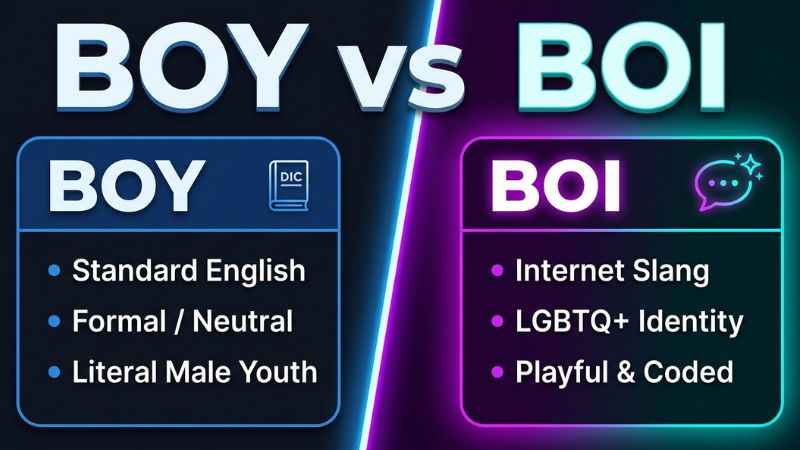
Here is a side-by-side comparison of how these two words function in real-world usage:
| Feature | Boy | Boi |
| Primary Definition | A male child or young man | Slang, queer identity, greeting, or business acronym |
| Spelling | Standard English | Deliberate phonetic alternative |
| Formality Level | Neutral / Standard English | Informal / Internet slang |
| Cultural Roots | Old English / Standard | AAVE, Skate Culture, LGBTQ+, Welsh |
| Appropriate Settings | School, work, formal documents, daily speech | Texting, social media captions, casual chats |
| Pronunciation | /bɔɪ/ | /bɔɪ/ (Pronounced identically) |
FAQ: People Also Ask About BOI
What does “ya boi” mean?
“Ya boi” is slang for “your boy.” People commonly use it as a playful third-person way to refer to themselves (e.g., “Ya boi just got a promotion!”) or to point out a close friend in a group.
Is “boi” a racist term?
No, “boi” is not inherently racist. However, it originated within African American Vernacular English (AAVE) and queer communities of color. Using it respectfully means recognizing its origins and avoiding inappropriate or mockative use.
What does “boi” mean on TikTok?
On TikTok, “boi” usually means a friend, a cute pet, or an affectionate nickname. It is frequently featured in funny audio trends, pet videos, and lighthearted commentary.
What does it mean when a girl says “boi”?
When a girl calls you “boi,” it typically means she feels comfortable around you. Depending on her tone and your relationship, it can be a casual friend nickname, an inside joke, or a playful, flirty term of endearment.
Does “boi” mean “boy”?
Yes, in most text messages and social media posts, “boi” is simply a fun, informal spelling of “boy.” However, it can also refer to a queer gender identity, a Welsh greeting, or a business acronym depending on the setting.
What’s the difference between “boy” and “boi”?
“Boy” is the standard English word for a male youth. “Boi” is an informal alternative spelling used for online slang, queer identity expression, or specific cultural greetings. Both words are pronounced the exact same way.
What does BOI mean in business?
In business, BOI stands for Beneficial Ownership Information. It refers to official documentation that identifies the individuals who ultimately own or control a business entity.
What does “boi” mean in Welsh?
In North Wales, “boi” is a casual regional term of address meaning “mate,” “lad,” or “buddy.” Locals use it as a friendly greeting when talking to friends.
Can I use “boi” to describe someone?
It is best to use “boi” only if the other person uses it for themselves, or within casual texting between close friends. Avoid using it to describe strangers or in professional environments.
Key Takeaways: Understanding BOI in Context
- Check the Context: Look at where you saw the word. A text message uses “boi” as playful slang, an identity profile uses it to show gender expression, and a tax document uses it as a business acronym.
- Recognize the Roots: Remember that the slang and identity meanings came from AAVE and LGBTQ+ communities of color before spreading to mainstream internet culture.
- Keep Business Separate: Capitalized “BOI” stands for Beneficial Ownership Information in corporate financial contexts.
- When in Doubt, Keep It Casual: Use “boi” for friendly texts, pet pictures, and online memes, but stick to standard spelling for professional communication.
To determine which meaning fits your situation, double-check who sent the message and where you read it. If you are texting a friend or posting a meme, treat it as fun internet slang; if you are reviewing corporate paperwork, treat it as a financial acronym.
You May Also Like:
What Does IWK Mean in Texting?
What Does IKR Mean? Texting Meaning, Tone, Examples, and Replies

Joseph Quinn is the founder and editor of Punspa, a technology-focused website covering technology, website reviews, internet terms, and other things worth figuring out online. He writes and edits the site’s technology and web content, with a focus on clear, useful explanations. He also enjoys humor and wordplay, which occasionally leads him to write a pun-related article just for the fun of it.