The term LWSpeakStyle is commonly interpreted as Let Wardrobe Speak Style. It represents an intentional approach to dressing that builds confidence through neutral foundations, perfect fit, and strategic styling rather than temporary trends.
To master fashion tips lwspeakstyle, follow these core rules:
- Audit your closet first: Keep only what fits and feels good today.
- Pass the three-item test: Never buy a piece unless it pairs with three existing items.
- Build a neutral base: Anchor your wardrobe in black, white, gray, navy, beige, and brown.
- Prioritize fit over price: Tailor your clothes so the silhouette flatters your body proportions.
- Apply the third piece rule: Layer a jacket, cardigan, or bold accessory over basic tops and bottoms.
- Maintain grooming standards: Keep shoes clean, steam your clothes, and fix small details.
- Use one statement accessory: Let a single item stand out while keeping everything else minimal.
What Is LWSpeakStyle? (And Why It Works)
LWSpeakStyle is a practical approach designed to solve decision fatigue and stop impulse buying. Instead of chasing fast fashion, this approach focuses on building a cohesive wardrobe where every piece works together. When your clothing fits well and aligns with your lifestyle, dressing well becomes an automatic daily habit.
       [ Essential Wardrobe Pillars ]
                     │
 ┌───────────────────┼───────────────────┐
 │                   │                   │
 ▼                   ▼                   ▼
Neutral Base    Fit & Proportion   Third Piece Rule
(80% Essentials)  (Tailored Look)   (Instant Polish)
This approach relies on four main pillars:
- Neutral Foundations: Core colors make mixing and matching effortless.
- Fit & Proportion: How clothing sits on your frame matters more than the brand name on the label.
- Grooming Details: Clean shoes, pressed fabrics, and neat hair elevate basic outfits instantly.
- Strategic Accessories: One intentional piece adds personality without creating visual clutter.
Start Here: The 5-Step LWSpeakStyle System
Building a functional closet does not require buying a brand-new wardrobe overnight. Use this simple five-step method to organize what you own and shop smarter moving forward.
Step 1 — Closet Clean-Out (Love It, Wear It, Donate It)
To fix a crowded closet, you must remove items that drag down your daily choices. Set aside two hours and sort every item into four clear piles.
| Pile Name | Rule | Action |
| Keep | Fits today, looks great, and gets worn regularly. | Put back at eye level. |
| Tailor | High-quality piece that needs minor adjustments (hems, waist). | Place in your car or repair bag immediately. |
| Donate/Sell | Good condition, but does not fit your current lifestyle or body. | Box up and drop off within 48 hours. |
| Toss | Stained, stretched, or worn out beyond repair. | Recycle or discard responsibly. |
Rule of thumb: Apply the 12-month rule. As a general decluttering guideline, if you have not worn an item in the past full year, it does not belong in your daily rotation.
Step 2 — The Three-Item Test Before You Buy
Before purchasing any new garment, test its versatility against your current wardrobe. If an item fails this test, leave it in the store.
- 3 Existing Pairings: Can you immediately name three pieces already in your closet that pair with it?
- 3 Occasions: Can you wear this to work, a casual weekend event, and a dinner out?
Passing both checks prevents orphaned clothes that sit in your closet with the tags still attached.
Step 3 — Build a Neutral Base (Without Looking Boring)
A neutral foundation creates maximum outfit combinations with minimal pieces. Anchor your core collection with black, white, gray, navy, beige, and rich brown.
To prevent neutral outfits from looking plain:
- Mix undertones: Pair cool charcoal gray with warm cream tones.
- Add texture: Combine smooth leather, soft knits, and crisp cotton in a single look.
- Use value contrast: Layer light pieces against dark outer layers for visual depth.
Step 4 — Fit & Proportion First (Before Price)
Expensive clothes look cheap when they do not fit, while budget clothing looks high-end when tailored correctly. Focus on silhouette balance by following the rule of thirds, a classic principle from visual arts applied to fashion. Aim for a 1/3 top to 2/3 bottom visual balance rather than cutting your body in half with a 1/1 ratio. Tuck in your tops or use a belt to define your waistline.
Step 5 — Grooming + One Statement Accessory
The final step happens outside your clothing tag. Perfect clothing cannot overcome sloppy grooming details.
- Maintain your garments: Use a fabric steamer on wrinkles and a lint roller on dark fabrics.
- Care for footwear: Keep leather clean and scuffs buffed away.
- Choose one focal point: Wear one bold necklace, a statement bag, or eye-catching shoes. Keep all other jewelry delicate and simple.
Everyday Style Habits That Make You Look Polished
Small daily styling choices separate an average outfit from a curated look. These repeatable formulas turn basic items into polished ensembles.
The Third Piece Rule
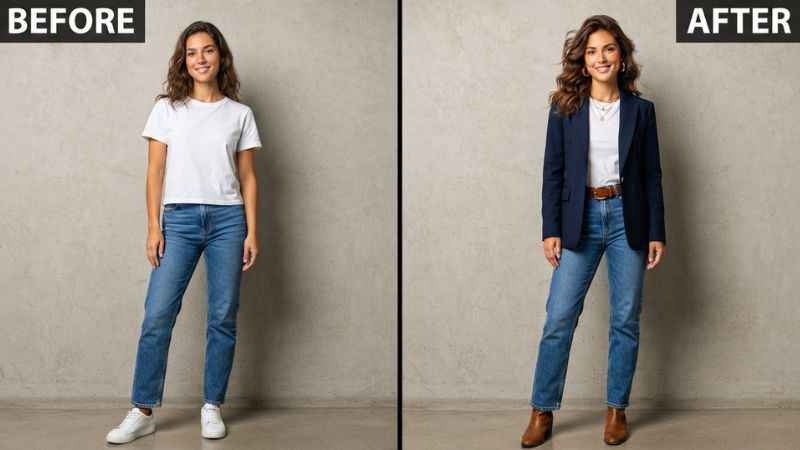
A top and a bottom make a basic outfit. Adding a third piece turns it into a styled look.
+-----------------------------------------------------------+
|                   THE THIRD PIECE FORMULA                 |
|                                                           |
|  [ Base Top ]  +  [ Base Bottom ]  +  [ The 3rd Piece ]   |
|   T-Shirt          Jeans               Structured Blazer  |
|   Sleeveless Dress Belt                Knit Cardigan      |
|   Trousers         Sweater             Printed Scarf      |
+-----------------------------------------------------------+
Here are three simple combinations:
- Casual Work: Straight-leg jeans + white tee + tailored navy blazer.
- Weekend Brunch: Midi dress + leather belt + lightweight cardigan.
- Cool Weather: Ankle trousers + fitted turtleneck + oversized trench coat.
Comfortable Clothes, Chic Results: 5 Styling Formulas
You do not need uncomfortable clothes to look put-together. Swap basic loungewear items for refined alternatives that offer the exact same comfort level.
| Basic Item | Chic Upgrade | Actionable Swap Strategy |
| Sneakers | Leather Loafers | Swap 1: Trade athletic sneakers for minimalist leather loafers or sleek white trainers. |
| Hoodie | Structured Jacket | Swap 2: Replace a fleece hoodie with a structured utility jacket or knit cardigan. |
| Joggers | Tailored Trousers | Swap 3: Swap drawstring sweatpants for relaxed, wide-leg tailored trousers. |
| Graphic Tee | Ribbed Turtleneck | Swap 4: Upgrade a loose graphic t-shirt to a fitted ribbed crewneck or turtleneck. |
| Flip-Flops | Pointed Flats | Swap 5: Replace foam flip-flops with pointed-toe slide sandals or flat mules. |
Accessorize With Intent
Accessories should complete an outfit, not compete for attention. Select a primary focus area based on your garment choices.
- High necklines: Skip the necklace entirely and choose bold hoop or drop earrings.
- Simple neutral outfits: Introduce a structured shoulder bag in a deep wine or cognac tone.
- Monochrome looks: Add a textured leather belt with clean metal hardware to break up the color block.
Your Neutral Palette Playbook
A structured neutral palette allows every top to match every bottom. Balance your choices across six primary core shades.
| Cool Neutrals | Warm Neutrals |
| • Black | • Cream / Soft Beige |
| • Crisp White | • Camel / Warm Tan |
| • Charcoal Gray | • Rich Chocolate Brown |
| • Deep Navy | • Olive / Forest Green |
Mix Warm and Cool Undertones
Combining cool gray with warm camel creates an intentional, modern palette. Avoid wearing only one flat tone from head to toe unless you vary the fabric textures significantly.
Use Value Contrast
Combine light, medium, and dark values within the same look. For example, pair a light cream sweater with medium-gray trousers and a dark navy coat. This contrast guides the eye and adds structural interest.
80/20 Wardrobe Color Balance
In general fashion guidelines, keeping 80% of your wardrobe grounded in neutral base colors and using the remaining 20% for subtle accent colors like burgundy, muted olive, or soft blue ensures high mix-and-match capability while allowing room for personal expression.
Fit & Proportion: Look Taller, Leaner, and More Put-Together
Adjusting where clothing lines fall on your body changes how your overall posture and height are perceived.
Rule of Thirds for Silhouettes
Avoid dividing your body in half horizontally. A long top worn over a long skirt creates two equal halves, which can make you look shorter.
  INCORRECT (1/1 Ratio)               CORRECT (1/3 to 2/3 Ratio)
┌───────────────────────┐           ┌───────────────────────┐
│     Long Top (50%)    │           │    Tucked Top (33%)   │
├───────────────────────┤           ├───────────────────────┤
│                       │           │                       │
│    Long Skirt (50%)   │           │   High-Waist Pants    │
│                       │           │         (67%)         │
└───────────────────────┘           └───────────────────────┘
- Lower half focus: Tuck your top into high-waisted trousers to lengthen your legs.
- Upper half focus: Pair a cropped layer with a long flowy skirt or wide-leg pants.
Tailored vs. Relaxed: The Balance That Works
Combine oversized items with fitted pieces to maintain structure.
- Fitted top + Loose bottom: A narrow turtleneck balances wide-leg linen trousers.
- Oversized top + Fitted bottom: A relaxed boyfriend blazer balances slim-fit trousers or straight jeans.
- Avoid double-loose or double-tight: Wearing oversized garments top-to-bottom looks boxy, while tight garments top-to-bottom can look unpolished.
Seasonal Capsule: 12 Pieces, 60+ Outfits
A functional capsule wardrobe relies on versatility. As a practical example of capsule math, with just 12 well-chosen items, you can create dozens of distinct outfits by cycling layer options.
The 12-Piece Core Blueprint
| Category | Recommended Capsule Items |
| 4 Tops | White button-down, black ribbed crewneck, beige cashmere knit, striped tee |
| 4 Bottoms | Dark straight jeans, tailored black trousers, wide-leg beige pants, satin midi skirt |
| 1 Dress/Jumpsuit | Black wrap dress or tailored jumpsuit |
| 2 Outerwear | Camel trench coat, structured black blazer |
| 2 Shoes | Leather loafers, sleek ankle boots |
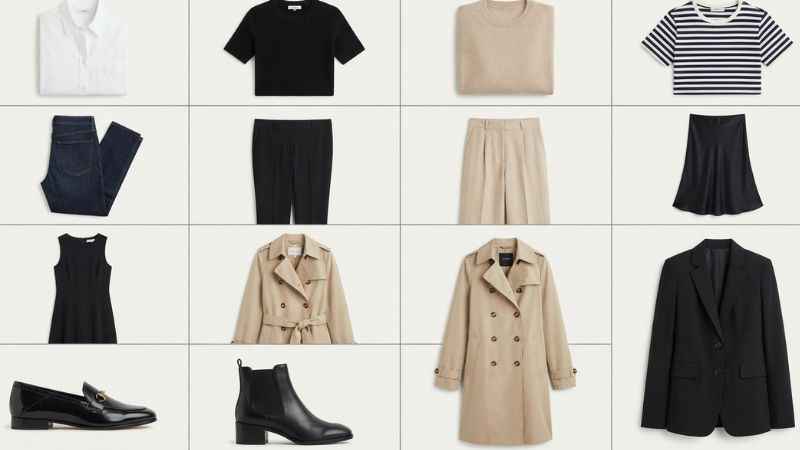
Outfit Math: How 12 Pieces Become 60+ Looks
By pairing each of the 4 tops with each of the 4 bottoms, you create 16 base outfits.
┌─────────────────────────────────────────────────────────┐
|                  OUTFIT MULTIPLICATION                  |
|                                                         |
|  4 Tops  ×  4 Bottoms  =  16 Base Looks                 |
|  16 Base Looks  ×  3 Outerwear States  =  48 Outfits    |
|  Add Dress Options + Shoe Swaps        =  60+ Total     |
└─────────────────────────────────────────────────────────┘
- Without outerwear: 16 combinations.
- Adding Blazer: 16 new combinations (32 total).
- Adding Trench Coat: 16 new combinations (48 total).
- Swapping shoes and layering the dress as a skirt: Pushes total combinations past 60 unique looks.
Trends to Skip (And What to Wear Instead)
Chasing short-lived micro-trends costs money and clutters your closet with single-use items.
| Micro-Trend to Skip | Why It Fails LWSpeakStyle | What to Wear Instead |
| Ultra-fast fashion trend tops | Poor fabric quality; outdated within months. | Classic ribbed crewnecks or crisp poplin shirts. |
| Overly distressed denim | Hard to dress up; looks overly casual. | Solid mid-wash or dark-wash straight jeans. |
| Gimmicky, unwearable footwear | Uncomfortable; fails the three-occasion test. | Leather loafers, clean white sneakers, or low block heels. |
| Extreme oversized sack cuts | Hides body shape entirely without structure. | Relaxed-fit blazers with defined shoulders. |
Common Mistakes (And How to Fix Them)
| Style Issue | LWSpeakStyle Fix |
| Impulse Buying | Enforce the Three-Item Test |
| Uncomfortable Outfits | Apply Comfort-to-Chic Swaps |
| Boring Neutrals | Mix Textures & Undertones |
| Messy Silhouette | Balance Tight vs. Loose Pieces |
- Buying clothes for a future body or lifestyle: Buy items that fit who you are and what you do right now.
- Ignoring basic alterations: Sleeves that are too long or pant legs that drag ruin an outfit’s lines. Take clothing to a local tailor for simple fit adjustments.
- Over-accessorizing: Wearing a necklace, scarf, hat, and loud rings simultaneously distracts from your overall look. Choose one focal point.
- Keeping worn-out basics: White tees turn yellow and black pants fade over time. Replace core basics once they lose their shape or color.
FAQ: Fashion Tips LWSpeakStyle
What is the 3-3-3 rule in fashion?
The 3-3-3 rule is a popular minimalist styling challenge inspired by micro-capsule concepts like Courtney Carver’s Project 333 (which originally used 33 items for 3 months). In the 3-3-3 challenge, you pick 3 tops, 3 bottoms, and 3 pairs of shoes to create various distinct outfit combinations for travel or capsule wardrobe planning.
What makes an outfit look high-end instantly?
An outfit looks high-end when clothes fit properly, fabrics are wrinkle-free, and color choices remain simple. Neutral monochrome tones, clean footwear, structured outerwear, and neat hair add instant polish regardless of price.
How do I use clothing proportions to look taller?
To look taller, follow the 2/3 proportion rule. Tuck your tops into high-waisted bottoms to visually extend your leg line. Wearing nude shoes or matching shoe color to pants also creates an uninterrupted line.
How do I build a capsule wardrobe from scratch?
Start by cleaning out your closet to see what you actually wear. Next, establish a base color palette of 2–3 neutrals. Buy versatile core basics first—like dark jeans, a crisp shirt, and a tailored blazer—before adding any pattern or accent pieces.
How many clothes do I actually need in my closet?
Many capsule wardrobe guides suggest that around 30 to 40 versatile pieces per season, including tops, bottoms, dresses, and outerwear, work well for most lifestyles. A smaller, well-curated wardrobe where every item matches creates more wearable outfits than an overcrowded closet full of mismatched items.
What are the best neutral colors to start with?
The best foundational neutrals are black, white, gray, navy, beige, and camel. These colors pair effortlessly with each other and serve as a canvas for subtle accent pieces or statement jewelry.
How do I make comfortable clothes look chic?
To make comfortable clothes look chic, replace casual fabrics with structured alternatives. Swap athletic sweatpants for wide-leg knit trousers, replace hoodies with tailored jackets, and trade canvas sneakers for leather loafers.
What is the third piece rule?
The third piece rule states that a complete, polished outfit consists of three elements: a top, a bottom, and an extra layering piece or statement accessory (like a blazer, cardigan, scarf, or belt).
Your Next Action
Do not attempt to overhaul your entire wardrobe at once. Pick five items from your closet today and apply the Three-Item Test to each. Keep what passes, schedule alterations for items that need fit adjustments, and donate what does not fit your daily life.
You May Also Like:
SparkPressFusion.com: What It Is, Is It Legit, and Should You Trust It?
Fashionisk.com Explained: What It Is, What It Covers, and How to Use It Safely

Joseph Quinn is the founder and editor of Punspa, a technology-focused website covering technology, website reviews, internet terms, and other things worth figuring out online. He writes and edits the site’s technology and web content, with a focus on clear, useful explanations. He also enjoys humor and wordplay, which occasionally leads him to write a pun-related article just for the fun of it.