Feening is informal slang that means intensely craving, longing for, or wanting something, but understanding the feening meaning depends heavily on how and where the word is used. The term is often associated with intense cravings for drugs or alcohol. In informal online and conversational use, people may also apply it to non-substance desires, such as food, attention, or a person. Context determines whether it is lighthearted banter or a serious sign of distress.
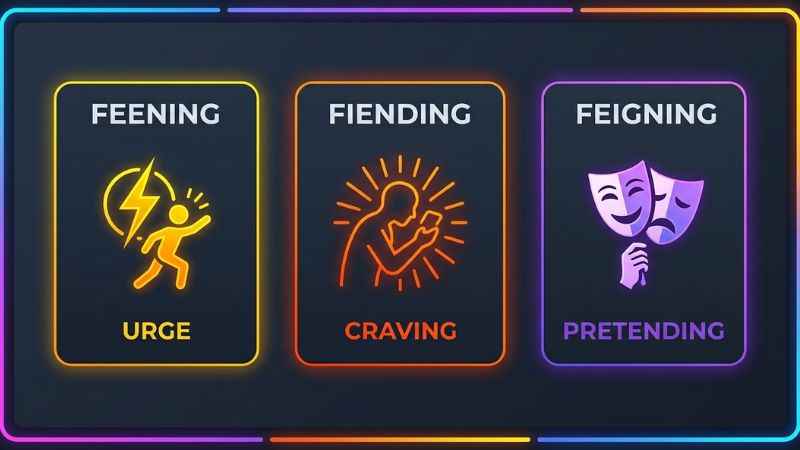
Feening means craving; feigning means pretending.
| Phrase | Likely Meaning | Tone | Example |
| “I’m feening for fries” | Wanting a specific food badly | Playful / Lighthearted | “I skipped lunch and now I’m feening for fries.” |
| “He’s feening for her attention” | Desperately seeking someone’s focus | Teasing / Critical | “He posted three selfies because he’s feening for her attention.” |
| “She said she’s feening” | Experiencing a strong urge or desire | Neutral | “She said she’s feening to go to the beach this weekend.” |
| “He’s feening for a drink” | Experiencing a serious alcohol craving | Serious / Concerned | “He has been sober for weeks, but tonight he’s feening for a drink.” |
What Does Feening Mean?
The feening meaning goes beyond simple wanting. It describes a deep urge that feels hard to ignore. When someone says they are feening, they feel an intense pull toward an object, activity, or person.
The word works as a flexible slang term. You might hear it in rap lyrics, read it in a text message, or see it in a TikTok caption. It can point to everyday habits like drinking coffee, or it can describe severe physical cravings linked to substance use.
Is feening a real word?
It is informal slang rather than standard, formal English or a clinical medical term. Most formal publications do not use it, though modern dictionaries and reference sites track informal slang terms as language evolves.
How do you pronounce feening?
Pronounce it as FEE-ning. In casual writing, people may use forms such as “feenin’.”
Feening, Fiending, Feen, and Feigning
Many people mix up “feening” with words that sound similar. Using the wrong word can completely change the message of your sentence.
| Term | Meaning | Typical Setting | Recommended Use |
| Feening | Informal craving or intense desire | Texting, social media, casual speech | Fine in informal contexts |
| Fiending | Strong craving; conventional root spelling | Casual speech and writing | Preferred for clearer informal writing |
| Feen | Informal dialect or slang variation | Informal speech, music lyrics | Use only in casual settings |
| Feigning | Pretending, faking, or simulating | Standard and formal English | Never use as a synonym for craving |
Is “Feening” or “Fiending” Correct?
The terms are often used interchangeably in informal contexts to describe an intense craving. Fiending is formed from fiend + -ing. In informal English, fiend can refer to a person strongly devoted to or addicted to something. Feening is commonly used as an alternative informal spelling, and some sources describe it as reflecting pronunciation.
Neither spelling is wrong in a casual text, but “fiending” stays closer to standard English roots.
Why Feening and Feigning Are Not the Same
A common mistake is using “feigning” when you mean “feening.” These two terms have completely different meanings.
- Feening means craving something intensely.
- Example: “I am feening for a cup of coffee right now.”
- Feigning means pretending or faking a feeling or action.
- Example: “She is feigning illness so she can skip the meeting.”
Warning: Do not write “feigning for pizza” or “feigning for you.” Feigning means pretending, not craving.
What Does “Feening for Someone” Mean?
In dating and relationship contexts, “feening for someone” means feeling a powerful romantic, physical, or emotional attraction. It implies that you cannot get that person out of your mind and desperately want their time, affection, or reply.

| Message | Most Likely Meaning | Healthy Interpretation |
| “I’m feening for you” | Strong attraction or missing someone | Ask what they mean if the relationship is new or unclear |
| “He’s feening for her” | Wants attention, contact, or intimacy | Can be normal flirtation or exaggerated romance |
| “She’s feening over him” | Preoccupied with a new crush | Usually lighthearted, but can signal single-minded focus |
| “Stop feening” | Acting overly eager, desperate, or fixated | A reminder to stay calm and set emotional boundaries |
Is Feening for Someone Romantic or Sexual?
It can be either. The exact tone depends entirely on your relationship history and current situation:
- Flirty: Sent as a late-night text, it often means physical attraction or missing intimacy.
- Affectionate: Sent to a partner after days apart, it signals simple emotional longing.
- Overwhelming: If used by someone you barely know, it might signal pushy or overly needy behavior.
How to Respond When Someone Says They Are Feening for You
- If you like them: Reciprocate clearly. “I’ve been missing you too! Let’s hang out tonight.”
- If you are unsure: Keep it light and ask for clarity. “That’s intense! What are you up to?”
- If you are not interested: Set a firm boundary immediately. “I think you should slow down. I just want to keep things friendly.”
How Feening Is Used in Texts and Everyday Slang
People use this slang across social media apps like TikTok and Instagram to add humor or drama to simple feelings.
- Food and Drinks: “I’ve been feening for sushi all week.” (Translation: I really want sushi.)
- Hobbies and Media: “They are feening for the next season of that show.” (Translation: They are extremely excited to watch it.)
- Social Connection: “He is feening for a reply.” (Translation: He wants a text back immediately.)
When Not to Use the Word
- Workplace Communication: Avoid using slang in work emails, client presentations, or cover letters. Use standard verbs like “eager for” or “looking forward to.”
- Around Recovery Communities: Consider avoiding casual use in recovery-related settings, since some people may find addiction-linked slang insensitive.
Feening and Substance Cravings: When the Term Is Serious
While feening is common slang, real substance cravings are a medical reality. NIDA lists craving—a strong desire or urge to use a substance—among the symptoms used to assess substance use disorder. Craving by itself does not diagnose SUD.
When someone uses the term about substance use, it may describe a strong craving; the word alone cannot establish withdrawal, distress, or a diagnosis.
When to Seek Immediate Support
Casual slang should never hide a health emergency. Seek urgent help if there is an immediate risk of overdose, self-harm, harm to others, or a medical emergency.
Emergency and Support Resources: For immediate danger, suspected overdose, or imminent risk of self-harm or harm to others, call local emergency services immediately. In the U.S., call or text 988 for suicide or mental-health crisis support. SAMHSA’s National Helpline (1-800-662-HELP [4357]) is free, confidential, and available 24/7, 365 days a year for non-emergency treatment referrals and information in the U.S. FindTreatment.gov is a confidential, anonymous resource for finding treatment in the United States and its territories. Outside the U.S., please reach out to local emergency services or a health professional.
Common Mistakes When Using Feening
| Common Mistake | Better Approach |
| Writing “feigning for pizza” | Write “feening for pizza” or “craving pizza” |
| Assuming it always refers to drugs | Check the surrounding conversation cues |
| Assuming it never has serious meaning | Take substance-related statements seriously |
| Using it in professional writing | Choose standard words like “craving” or “desiring” |
| Calling someone a “fiend” casually | Be mindful that the term can carry social stigma |
Frequently Asked Questions
What are synonyms for feening?
Common synonyms include craving, yearning, longing, desperately wanting, and fixating on. Words like “obsessing” carry a stronger, more negative tone.
Is feening a bad word?
It is generally used as informal slang rather than conventional profanity, though it may sound harsh or insensitive in some contexts.
Does feening always mean drugs?
No. It can be used for non-drug desires in casual conversation, though it is also strongly associated with substance cravings.
What does “feen” mean?
“Feen” appears in dialect and informal slang variations. In casual usage, it is sometimes applied similarly to “feening” or “fiend,” though formal dictionary definitions can vary depending on regional dialect.
What does “stop feening” mean?
It means “stop acting desperate, overly eager, or fixated.” Friends often use it to tease someone who is trying too hard for attention.
Can I use feening in formal writing?
No. Stick to standard English words such as “craving,” “seeking,” “desiring,” or “longing for.”
What does feening mean in a text?
It means “I really want this” or “I really want to see you.” Read the full conversation to judge if it is romantic, playful, or serious.
Is feening the same as fiending?
Fiending is formed from fiend + -ing. Feening is commonly used as an alternative informal spelling, and the two are often used similarly to describe an intense craving.
What to Do Next
If you saw “feening” in a text message, check the rest of the conversation before replying. If it is about food, plans, or flirting, keep your response light. If it points to a serious substance struggle, set aside the slang and offer real support using established medical resources.
You May Also Like:
No Mames Meaning: What It Means, How Strong It Is, and When to Use It
What Does GC Mean? Group Chat, Good Call, and Other Uses

Joseph Quinn is the founder and editor of Punspa, a technology-focused website covering technology, website reviews, internet terms, and other things worth figuring out online. He writes and edits the site’s technology and web content, with a focus on clear, useful explanations. He also enjoys humor and wordplay, which occasionally leads him to write a pun-related article just for the fun of it.