If you search for the word pulsamento, you will find a confusing mix of answers. Some sites claim it is an official music term. Others say it is a medical pulse, a modern business theory, or an Italian word for rhythm.
In truth, pulsamento is a term that appears online to describe a pulsing rhythm or beat. It is referenced online in music discussions, particularly among classical and fingerstyle guitar players, to describe an internal, steady pulse. However, it is not a standardized music theory term, nor is it a formal medical diagnosis.
Here is a clear look at what the term actually means, where it comes from, and how to use it correctly without falling for common online myths.
Pulsamento Summary
- Primary Definition: An internal, pulsing rhythm or finger-plucking technique in music.
- Language Roots: Related to Spanish and Portuguese roots (derived from the Latin verb pulsare).
- Common Misconception: It is often wrongly called an Italian word or an official medical term.
- Best Context: Use it when discussing guitar technique or felt musical energy.
Quick Answer: What Does Pulsamento Mean?
Pulsamento refers to a steady, driving rhythm or felt pulse. Depending on where you see the term, it usually falls into one of three areas:
- In music: An internal, pulsing rhythm or a specific finger-plucking technique on instruments like the acoustic guitar.
- In language: A term associated with Spanish and Portuguese roots that relates to pulsing, striking, or throbbing.
- In broader use: A trendy metaphor used by modern wellness blogs and business platforms to describe natural cycles or creative momentum.
How to pronounce it:
- Spanish: pool-SAH-men-toh
- Portuguese: pool-sah-MEN-toh
While the word appears in online musician talk, no evidence was found of it in major English-language music theory textbooks.
Pulsamento in Music: The Core Meaning
What Is Music Pulsamento?
In music, pulsamento describes the deep, internal pulse that holds a piece together. It is the steady energy that makes listeners tap their feet, even when the underlying drumbeat slows down or stops.
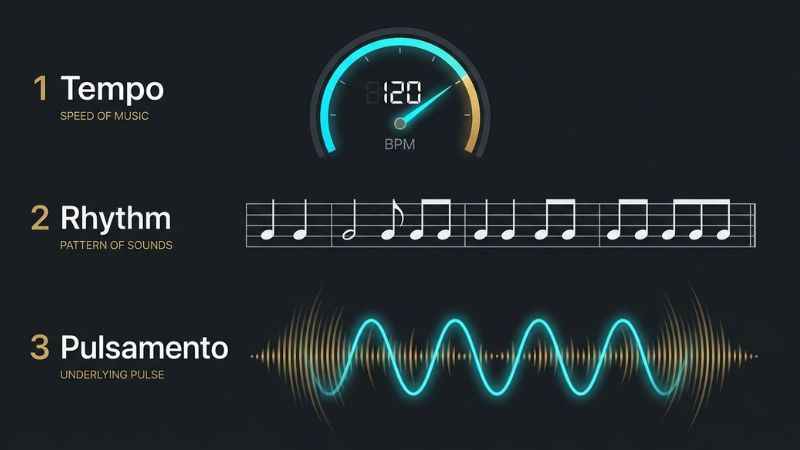
It is important to understand how pulsamento differs from basic musical elements like tempo and rhythm:
| Term | What It Measures | Example |
| Tempo | The speed of the music measured in beats per minute (BPM). | A fast song set to 120 BPM. |
| Rhythm | The actual pattern of notes and rests played over time. | A strumming pattern or a drum beat. |
| Pulsamento | The felt, continuous physical pulse that drives musical feeling. | The deep, steady groove guiding a player’s hand. |
Tempo gives you the exact speed, while rhythm gives you the note patterns. Pulsamento gives the piece its physical drive and breathing space.
Pulsamento Guitar Technique: How It Works
In online discussions of classical, flamenco, and Latin acoustic guitar, the term is used to describe a steady, repetitive plucking technique. Instead of using a plastic pick, the player uses their right-hand fingers to pluck individual strings in a smooth, continuous wave.
This fingerstyle movement creates a rolling sound that acts like a musical heartbeat. It is closely related to technique styles like arpeggios (playing chord notes sequentially) or controlled tremolo (repeating a single note very quickly).
| Finger Symbol | Finger Name | Classical Name | Placement / Position | Role in Playing |
| p | Thumb | Pulgar | Rests on the lower bass strings (E, A, D) | Plucking bass notes |
| i | Index Finger | Índice | Hovers over the 3rd string (G) | Plucking middle treble notes |
| m | Middle Finger | Medio | Hovers over the 2nd string (B) | Plucking upper treble notes |
| a | Ring Finger | Anular | Hovers over the 1st string (High E) | Plucking high treble notes |
How to Practice Pulsamento on Guitar
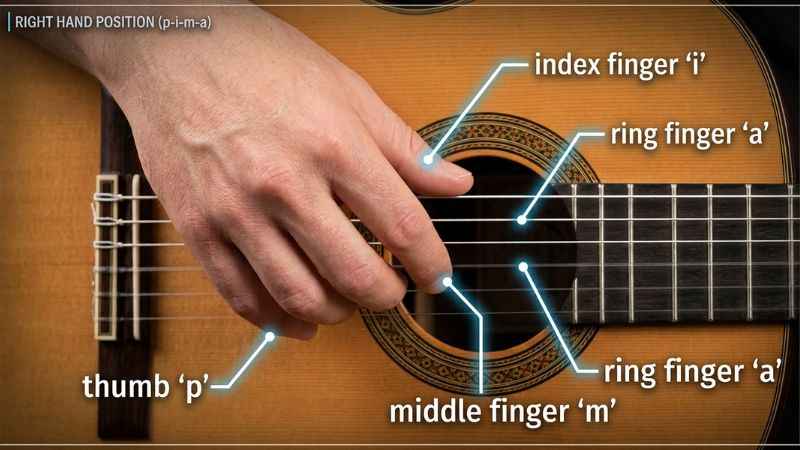
- Set Your Hand Position: Curve your right-hand fingers gently over the soundhole. Keep your wrist loose and relaxed.
- Establish the Bass Pulse: Use your thumb (p) to pluck a low bass string on beat one. Let the note ring out clearly.
- Roll the Treble Strings: Follow immediately by plucking the high strings using your ring (a), middle (m), and index (i) fingers in a smooth, continuous order.
- Build Rhythmic Evenness: Use a metronome set to a slow pace (around 60 BPM). Focus on making every finger pluck sound equal in volume and timing.
- Add Melodic Lines: Once your right hand moves automatically without hesitation, start holding down chord patterns with your left hand.
Common Practice Mistakes to Avoid:
- Using a pick: True fingerstyle pulse techniques require direct contact between the fingers and strings for tone control.
- Rushing the pattern: Increasing speed before your finger strength is even leads to a messy, uneven beat.
- Tensing the wrist: Stiff muscles block smooth movement and cause physical hand fatigue.
Pulsamento in Latin American Music
This concept is often discussed in relation to Latin American styles like salsa, samba, and flamenco. In these genres, rhythm relies heavily on underlying structural beats rather than simple drum patterns.
- Clave Patterns: In salsa, the 3-2 or 2-3 clave pattern acts as the rhythmic core. Musicians often refer to keeping this underlying key alive as maintaining the song’s natural pulse.
- Samba Grooves: In Brazilian samba, the continuous, driving push of the low surdo drums creates a physical pulse that propels dancers forward.
- Flamenco Alzapúa: Flamenco guitarists use a specialized thumb technique called alzapúa. While alzapúa uses the thumb to sweep up and down like a pick, it serves a similar purpose by creating a sharp, rhythmic driving force.
Etymology and Language Origins
Is Pulsamento Italian, Spanish, or Portuguese?
Many generic internet articles incorrectly list this term as an Italian word.
The term builds on the Latin verb pulsare, which means “to beat,” “to strike,” or “to throb.”
- Spanish: The term pulsamento is not listed in the official Diccionario de la Lengua Española (RAE). Spanish uses pulsación (the standard term) or pulsamiento (a dated term).
- Italian: The correct Italian word for pulsation is pulsazione. Standard Italian reference sources do not list pulsamento.
Understanding this linguistic root helps explain why the term appears online in Spanish- and Portuguese-language contexts.
Pulsamento vs. Pulsation vs. Pulse: What is the Difference?
Because these words share the same Latin root, readers frequently mix them up. However, their everyday usage belongs in completely different settings:
| Term | Simple Definition | Main Context | Is It Formal? |
| Pulse | A single beat, or the regular expansion of arteries caused by the heart. | Medical and general language. | Yes |
| Pulsation | A rhythmic series of pulses or continuous throbbing movements. | Science, physics, and medicine. | Yes |
| Pulsamento | An internal, felt musical rhythm or specialized guitar plucking style. | Music, fingerstyle guitar, and informal usage. | Informal |
Beyond Music: Metaphorical and Modern Uses
Pulsamento as a Life Rhythm and Wellness Concept
Outside of music, wellness writers have adopted the term as a metaphor for natural human cycles. You may see articles referring to your personal life beat—linking it to deep breathing, steady sleep habits, or productivity routines.
While these ideas can help guide daily self-care habits, remember that this is a modern, metaphorical use of the word. It is not an ancient wellness framework or a certified therapeutic practice.
Pulsamento in Business and Innovation Platforms
As of 2026, several digital sites (such as pulsamento.net or pulsamento.us) use the term inside their corporate branding. In these settings, businesses use the word as a flashy synonym for “momentum,” “market pulse,” or “creative drive.”
These web platforms use the term purely for brand identity. Their existence does not mean the word has an established history in business terminology.
Medical Context: Is Pulsamento a Clinical Term?
No, pulsamento is not a recognized medical term.
If you ask a doctor or nurse about your pulsamento, they will likely correct you. Standard healthcare settings rely exclusively on clear clinical terms:
- Use pulse or heart rate when talking about physical health.
- Use pulsation when describing visible blood movement in an artery.
Some online search engine tools occasionally pull incorrect data, defining this word as an arterial pulse. If you need health information, stick to official medical sites using standard clinical vocabulary.
Common Confusions and Misuses
Is Pulsamento a Real, Recognized Word?
While it appears across online content, its standing in formal language and English dictionaries is purely informal.
If you search standard English reference dictionaries, you will not find an entry for it. Furthermore, no evidence was found of it in major English-language music theory textbooks. Instead, it lives as a specialized, informal word shared online among players and content sites.
Why Are Online Definitions So Inconsistent?
If you search for a clear definition online, you will encounter dozens of conflicting answers. This confusion happens for two major reasons:
- Content Farm Copying: Many low-quality websites scrape definitions from one another without checking linguistic history or consulting real music teachers.
- Metaphorical Overuse: Marketing blogs routinely take musical or rhythmic words and apply them broadly to business, technology, and self-help topics.
To get accurate information, always favor sources written by verified music educators, guitarists, or professional linguists.
How to Use Pulsamento Correctly
When to Use “Pulsamento” vs. “Pulse” or “Rhythm”
To keep your speech clear and accurate, reserve this word for specific settings:
- Use “pulsamento” when: Discussing Latin American acoustic guitar techniques, describing the felt internal groove of a song, or referencing online music content.
- Use “pulse” or “rhythm” when: Communicating in general English, teaching introductory music lessons, or writing about medical health and exercise.
Tips for Learning Pulsamento Technique on Guitar
If you want to master this rhythmic style on the acoustic guitar, follow these simple practice guidelines:
- Work with a Metronome: Always start slow. Keep your speed steady before trying to play faster.
- Isolate Your Right Hand: Practice plucking open strings with your right hand without holding down any complex left-hand chords.
- Record Your Practice Sessions: Listen back to short recordings of your playing to check if your volume and string spacing sound smooth and even.
- Focus on Hand Relaxation: If you feel tension building in your forearm or wrist, stop immediately and stretch your fingers.
FAQ: People Also Ask About Pulsamento
How do you pronounce pulsamento?
In Spanish, it is pronounced “pool-SAH-men-toh”. In Portuguese, it is pronounced “pool-sah-MEN-toh”.
Is pulsamento the same as tremolo?
No, they are distinct techniques. Tremolo is the rapid repetition of a single note to create a sustained tone. Pulsamento refers to a broader, continuous rhythmic pulse across multiple strings and chords.
Can beginners learn the pulsamento guitar technique?
Yes, beginners can learn it. Start with simple open-string arpeggiated patterns at a very slow tempo before adding left-hand chord changes.
Does pulsamento appear in formal sheet music?
It almost never appears as a written musical term on sheet music. Composers use standard Italian directions like a tempo, rubato, or explicit BPM counts instead.
Is pulsamento used on electric guitar or just acoustic?
It is used mostly on nylon-string classical and steel-string acoustic guitars. However, fingerstyle electric guitar players can apply the exact same right-hand plucking techniques.
What is the difference between pulsamento and alzapúa?
Alzapúa is a specialized flamenco thumb technique that uses the thumbnail like a pick to strike downward and upward notes. Pulsamento is a general term for a rolling finger pattern across multiple fingers.
Are there specific exercises to improve my technique?
Simple finger-independence exercises work best. Practice alternating your thumb (p) with your index (i), middle (m), and ring (a) fingers in steady quarter-note and eighth-note patterns.
Why do some articles say pulsamento is an Italian word?
That is a widespread translation error made by low-quality content sites. The proper Italian word is pulsazione.
Key Takeaways
- Music Context: The word is used online to describe an internal, driving musical pulse or a fingerstyle guitar technique.
- Etymological Roots: The term traces back to the Latin pulsare. It is not an Italian word, and it is not listed in the standard Spanish RAE dictionary (which uses pulsación).
- Informal Usage: It is an informal term rather than a standardized music theory concept.
- Not Medical: Do not use it for medical health discussions; stick to clinical terms like pulse or heart rate.
- Avoid Marketing Hype: Modern uses of the term in business and wellness blogs are branding metaphors, not original definitions.
If you are a guitarist or music enthusiast, try practicing basic fingerstyle pulse exercises with a metronome today to improve your right-hand timing and rhythm control!
You May Also Like:
What Does HY Mean? The Fast, Context-First Guide to Texting “HY”
Purple Heart Emoji (💜): Meaning, Uses, and When to Send It

Joseph Quinn is the founder and editor of Punspa, a technology-focused website covering technology, website reviews, internet terms, and other things worth figuring out online. He writes and edits the site’s technology and web content, with a focus on clear, useful explanations. He also enjoys humor and wordplay, which occasionally leads him to write a pun-related article just for the fun of it.