What is smarttraderblog.com? If you searched for this website, you probably want to know what it offers, whether it covers trading, and if you can trust its content.
The domain name sounds like a financial website. However, Search results for similarly named domains show trading-related and general informational content. The exact content and purpose of smarttraderblog.com should be checked directly. This guide evaluates smarttraderblog.com to help you understand its purpose, verify its content, and use online trading information safely.
Financial Safety Notice: Readers should treat general articles as educational unless the site clearly offers a regulated advisory service. Never risk money you cannot afford to lose. Check the relevant regulator before using a broker, adviser, or financial service.
What Can Be Confirmed About SmartTraderBlog.com?
Many readers expect a site with “trader” in its name to focus only on the stock market, forex, or cryptocurrency. Search results for similar SmartTraderBlog domains show trading-related and general informational content. The exact purpose of smarttraderblog.com should be checked separately from smarttraderblogs.com.
The categories below appear in search results for similarly named domains. They are not confirmed as the current categories of smarttraderblog.com.
| Category | What Readers May Expect | What You Should Check |
| Trading & Education | Market concepts, chart patterns, and basic strategies | Author background, source links, and clear risk notices |
| Technology | Reviews of software, digital tools, and online trends | Publication dates and practical testing details |
| Lifestyle | Everyday tips, productivity guides, and personal habits | General writing quality and practical usefulness |
| Travel | Destination guides and travel tips | Up-to-date travel rules and clear location details |
| Health & Wellness | General wellness articles and routine advice | Medical sources and expert review |
| General Information | Broad guides on common everyday topics | Topic-specific knowledge and accuracy |
Does the Name Match the Site?
There is often a gap between a website’s domain name and its actual content. A brand name might feature the word “trader,” yet the site publishes general articles on travel or technology.
When a website covers many unrelated topics, its main focus becomes harder to pinpoint. An article about healthy habits does not require financial expertise. However, a guide on stock trading requires deep market knowledge. Always check the writer’s background on financial topics, no matter what domain name the site uses.
Is SmartTraderBlog.com a Broker, Signal Service, or Adviser?
It is vital to separate educational blogs from regulated financial services. Available pages present smarttraderblogs.com as an informational platform, while the exact purpose of smarttraderblog.com remains Unverified until its homepage and legal pages are checked directly.
       [ Search Query: SmartTrader ]
                     |
    +----------------+----------------+
    |                                 |
[ Similar domain names ]    [ Software & Brokers ]
    |                                 |
    +--> smarttraderblog.com — exact purpose not confirmed
    +--> smarttraderblogs.com — presents itself as an informational platform
    +--> SmartTrader.com (Charting)
    +--> Regulated Brokers (Trading)
To avoid confusion, keep these distinct entities in mind:
| Entity Name | Primary Purpose | What NOT to Assume |
| smarttraderblog.com | Purpose remains Unverified; separate from plural domains | Do not assume it executes trades, holds funds, or provides services without checking. |
| SmartTrader.com | Presents itself as trading charting software and tools | Do not assume it is connected to the blog without primary evidence. |
| SmartTrader Community | Presents trading signals, market analysis, education, support, and community features | Do not assume it shares ownership with general blogs. |
| Regulated Broker | A broker may hold or manage client accounts and execute trades | Do not assume a blog is licensed like a broker; check regulator records. |
Key Safety Checks Before Using Any Financial Site
Before relying on any site for market decision-making, check these basic safety items:
- Trading funds cautions: Readers should be cautious if a blog asks them to send trading funds or connect a bank account without clear business details.
- No personal advice: General educational articles are usually not personalized advice unless the site clearly offers and explains such a service.
- No profit promises: Guaranteed high returns or risk-free profits are major warning signs.
- Clear business details: Look for an “About Us” page, clear contact details, and disclosure policies.
- No secret signals: Be cautious if a site pressures you to buy paid trade signals or join private groups.
How to Check SmartTraderBlog.com
Evaluating a website requires looking at simple, observable trust signals. You can use this quick checklist to review smarttraderblog.com or any other financial blog.
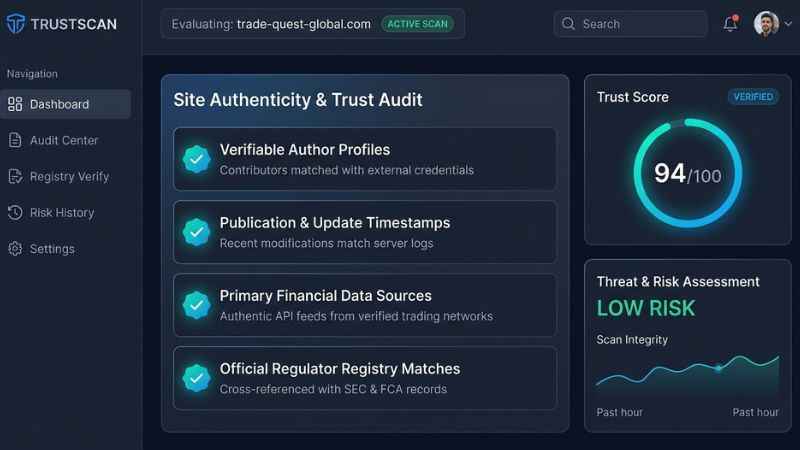
The Site Evaluation Checklist
- [ ] Named Authors: Articles list real writers with relevant experience in finance or journalism.
- [ ] Contact Information: A contact page appears on smarttraderblogs.com; the exact smarttraderblog.com contact details remain Unverified.
- [ ] Dates Listed: Posts show clear publication and last-updated dates.
- [ ] Primary Sources: The text links to official financial reports, market data, or regulatory sites.
- [ ] Disclosures: The site includes clear financial disclaimers and affiliate link notices.
- [ ] No Unrealistic Claims: The content avoids terms like “guaranteed returns” or “100% win rate.”
- [ ] Clear Corrections: No corrections policy was confirmed for smarttraderblog.com.
What an Online Review Can and Cannot Prove
Reading a website review helps you spot clear warning signs, but it has limits.
+------------------------------------+------------------------------------+
| WHAT YOU CAN VERIFY                | WHAT YOU CANNOT GUARANTEE          |
+------------------------------------+------------------------------------+
| - Visible author names and dates   | - Future trading profits           |
| - Presence of risk disclosures     | - Accuracy of every future post    |
| - Working contact forms and pages  | - Complete safety of third links   |
| - Domain record info if public     | - Personal fit for your capital    |
+------------------------------------+------------------------------------+
Common Warning Signs on Financial Sites
Stay alert for these common red flags when reading market content online:
- Guaranteed Returns: Guaranteed high returns are a warning sign and should be checked carefully.
- Urgent Pressure: Content that pushes you to deposit cash immediately is dangerous.
- Hidden Authors: Articles written by anonymous sources without verifiable background details.
- Unexplained Claims: Bold statements about high win rates that lack backtesting data or context.
- Broker Push: Be cautious of articles that aggressively force you toward a single broker.
How Should Beginners Use Trading Content Safely?
Learning to trade requires patience and a cautious approach. If you read financial topics on smarttraderblog.com, follow a step-by-step review process to protect your money.
Step 1: Identify Article Type (Educational, Opinion, or Promotion)
  --> Step 2: Check Author, Date, and Source Links
        --> Step 3: Verify Firms on Regulator Sites & Market Claims via Official Data
              --> Step 4: Test Concepts in a Practice Demo Account
                    --> Step 5: Protect Capital with Strict Risk Controls
A 5-Step Safe Reading Process
- Identify the Intent: Decide if the text is explaining a basic concept, sharing an opinion, or promoting a service.
- Check the Sources: Readers should check whether market claims link to primary data, official reports, or recognised market sources.
- Verify Independently: Use regulators to check firms and permissions. Use official data sources for market claims.
- Test First: A demo account lets users practise without risking deposited trading money, but results may differ from live trading.
- Manage Your Risk: Never place real money into a live trade based on a single blog post.
Common Beginner Mistakes to Avoid
- Confusing Examples with Advice: A blog post describing how leverage works is not an instruction to open a leveraged position.
- Ignoring Hidden Costs: Spreads, commissions, and slippage alter trade results compared to basic examples.
- Skipping Risk Tools: Trading without risk controls can create large losses. A stop-loss order is designed to close a position when price reaches a chosen level, but execution may differ.
- Chasing Headlines: Entering a live trade purely due to a sensational blog headline often leads to losses.
Practical Example: Evaluating a Strategy Guide
Imagine reading an article on smarttraderblog.com about a breakout trading strategy. A safe reader asks these critical questions before placing a trade:
- What market and timeframe does this example show?
- Does the strategy explain how to exit if a breakout fails?
- How do trading fees and spreads affect the final result?
- Has this concept been tested over long periods of market volatility?
Important Trading Concepts to Understand
A solid trading website explains foundational market terms clearly. Whether you read smarttraderblog.com or another educational resource, make sure you understand these core topics.
Fundamental vs. Technical Analysis
- Technical Analysis: Studying price charts, movement patterns, and indicators to spot potential trends.
- Fundamental Analysis: Looking at economic news, interest rates, company earnings, and central bank announcements.
Key Risk Control Terms
       [ Account Balance: $1,000 ]
                    |
      +-------------+-------------+
      |                           |
[ Example Risk (1-2%) ]   [ Position Size ]
  --> $10 to $20            --> Fits Stop Distance, Risk & Costs
- Position Sizing: Position sizing sets trade size using account risk, stop distance, instrument rules, and trading costs. As an example, a trader might choose to risk 1–2% of their balance on a trade, but risk limits should fit the trader’s situation.
- Stop-Loss Order: A stop-loss order is designed to close a position when price reaches a chosen level, but execution may differ during fast markets or gaps.
- Leverage and Margin: Leverage allows a trader to control a larger position with less required margin. It increases both gains and losses.
- Trading Journal: A detailed log where you record your trade entries, exits, reasons, and emotional state.
SmartTraderBlog.com Compared to Similar Names
Similar website names cause frequent confusion in search engines. Use this table to understand the differences between commonly searched terms:
| Search Term | Main Focus | How to Avoid Confusion |
| smarttraderblog.com | Exact site purpose is Unverified until checked directly | Check the homepage to see current articles and topics. |
| smarttraderblogs.com | A separate domain with a similar name. Ownership or connection is not confirmed. | Double-check the exact Web address in your browser bar. |
| SmartTrader.com | Offers charting software and market tool platform | Verify if the site offers account logins and charting features. |
| SmartTrader Community | Offers trading signals, market analysis, education, and community features | Look for active user discussion boards and community posts. |
| SmartTrader Broker | Unverified entity status; check official register records | Match legal firm name and regulator records before assuming status. |
How to Verify Any Trading Website Independently
Never rely entirely on a blog post or single review. You can verify financial websites and brokers yourself using official resources.
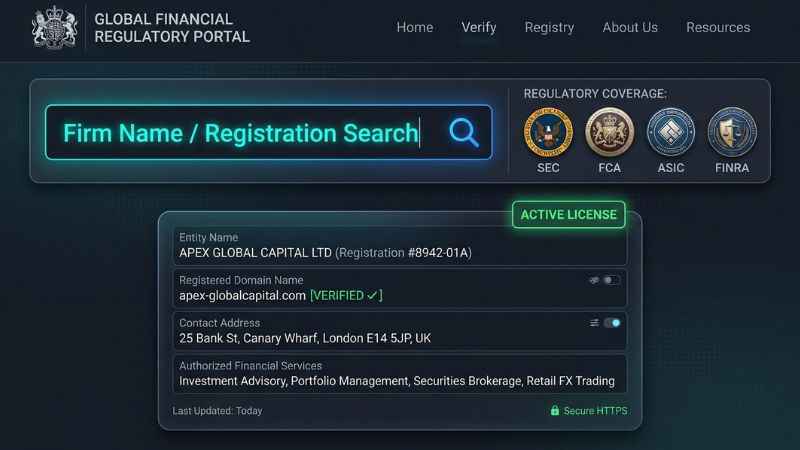
Step 1: Locate Legal Company Name and Registration Details
  --> Step 2: Visit the Regulator's Official Online Search Portal
        --> Step 3: Match Legal Name, Domain, Contact Details & Permitted Services
              --> Step 4: Confirm Withdrawal Terms and Public Complaints
Official Regulatory Registers
The correct register depends on the country, product, and firm type. If a site claims to be a regulated financial business, check these official registries:
- United States: The SEC, CFTC, FINRA, or state regulators, depending on the service.
- United Kingdom: Financial Conduct Authority (FCA).
- Australia: Australian Securities and Investments Commission (ASIC).
Frequently Asked Questions
Is SmartTraderBlog.com a broker?
No brokerage service was confirmed in the pages reviewed for this article. However, the exact current purpose of smarttraderblog.com remains unverified.
Does SmartTraderBlog.com give personalized financial advice?
A particular article should be treated as general information unless it clearly explains a different service. General information is not tailored to your personal financial situation, risk tolerance, or trading goals.
Can SmartTraderBlog.com guarantee trading profits?
Guaranteed high returns with little or no risk are major warning signs. Trading can involve substantial loss, with risk depending on the product and use of leverage.
Is SmartTraderBlog.com suitable for beginners?
Beginner suitability is Unverified. Readers should check the article’s author, sources, date, and risk information before relying on it.
Does SmartTraderBlog.com offer trade signals?
No trade-signal service was confirmed in the reviewed pages. You should check their live navigation menu to see current offerings.
Is SmartTraderBlog.com the same as SmartTrader.com?
SmartTrader.com offers charting software, while the exact purpose of smarttraderblog.com needs separate checking. They should not be assumed to be the same entity.
How can I check if a trading site is legitimate?
Find the company’s legal name on its website. Then, match the legal name, domain, contact details, and permitted services on official government regulator websites.
What should I do before following a strategy I read online?
Understand the strategy’s rules completely. Test it using past chart data or a practice demo account, and ensure you use strict risk limits before using real capital.
Conclusion: How Should You Use SmartTraderBlog.com?
When evaluating smarttraderblog.com, keep three clear facts in mind:
- Understand the Scope: The reviewed pages present smarttraderblogs.com as an informational platform. That finding should not be applied automatically to smarttraderblog.com.
- Verify Financial Claims: Check author credentials, publication dates, and primary source links on any market article you read.
- Practice Safety First: Never base live financial trades on a single blog post. Always use demo tools and verify regulatory details independently.
You May Also Like:
Deshoptec.com Review: What the Site Is and How to Check It Safely
Afextop Com: What It Is, What It Publishes, and How to Use It Safely

Joseph Quinn is the founder and editor of Punspa, a technology-focused website covering technology, website reviews, internet terms, and other things worth figuring out online. He writes and edits the site’s technology and web content, with a focus on clear, useful explanations. He also enjoys humor and wordplay, which occasionally leads him to write a pun-related article just for the fun of it.