Looking for thinkdesignblog com? ThinkDesignBlog.com is a website that covers web design, user experience topics, technology, gadgets, and remote-work tools. This guide explains what the site offers, how to navigate its categories, how to check its domain, and how to verify that its articles are safe and up to date.
Last reviewed: September 24, 2026.
Quick Answer: What Is ThinkDesignBlog.com?
ThinkDesignBlog.com is a digital publication that shares tutorials, guides, and software-related content. It includes content on web design and UI/UX tools. It also covers technology topics like laptops, headphones, remote-work gear, and invoicing software. Its content includes everyday tech and productivity guides.
What ThinkDesignBlog.com Covers
ThinkDesignBlog.com covers several topic areas across design, software, and technology. Understanding these categories helps you find the right guide quickly.
Web Design and UI/UX
This section includes content on digital visual design and site planning, offering guidance on how digital products look and function.
- Wireframes and Layouts: Guides on sketching initial site structures before adding color or visual details.
- Figma and Design Tools: Tutorials on using interface software to create vector graphics and clickable prototypes.
- Responsive Design: Tips for making websites adjust automatically to fit mobile phones, tablets, and desktop screens.
- Typography and Color: Advice on selecting readable fonts and accessible color combinations.
For instance, beginners learning responsive design in Figma can use these articles to practice setting up auto-layout frames for desktop and mobile views.
Product and Content Design
Product design goes beyond visual appeal to address how a digital tool works for the user.
- Digital Product Design: Explanations of user flows, wireframing steps, and interface tests.
- Content Design: Guidance on writing clear text for buttons, menus, and on-screen forms.
- Design Systems: Methods for organizing reusable buttons, icons, and colors so teams can build faster.
- User Research: Basic approaches to gathering feedback from real readers or app users.
Technology, Gadgets, and Productivity
ThinkDesignBlog.com regularly publishes technology articles alongside its design content.
- Laptops and Computers: Roundups comparing battery life and processing power for everyday work.
- Headphones and Audio: Content evaluating noise cancellation and comfort for long work sessions.
- Home-Office Equipment: Setup recommendations covering desk lighting and home-office setups.
- Productivity Software: Guides on choosing project-management platforms, invoicing apps, and team chat tools.
Note: Tech specifications change fast. Always check the published date on hardware and software articles to confirm model numbers and app features are current.
Freelancing and Digital Work
Freelancers need practical business advice alongside creative skills.
- Client Discovery: Steps for finding freelance work and communicating project scope clearly.
- Portfolios: Ideas for displaying past design work to prospective clients.
- Pricing and Invoicing: Basic templates and software guides for billing clients accurately.
Who Should Read ThinkDesignBlog.com?
Because the site covers a mix of topics, different readers will find value in specific sections. The table below matches reader goals with the best starting topics.
| Reader Type | Best Starting Topics | What You Will Learn |
| Design Beginner | Wireframes, typography, responsive design | Core terms and basic layout ideas. |
| UI/UX Learner | Figma tutorials, user flows, accessibility | How to design app screens and web layouts. |
| Product Designer | Design systems, handoff workflows | Ways to organize components and hand off files to developers. |
| Freelancer | Portfolios, client management, invoicing tools | Basic business guidance and workflow software choices. |
| Tech Buyer | Laptops, headphones, home-office tools | Key features to compare before buying workspace hardware. |
| Remote Worker | Productivity software, desk setup | Tools to stay organized and build a comfortable home workspace. |
Best Way to Navigate the Site
With articles ranging from Figma techniques to home-office setup and productivity content, staying organized saves time.

Start with the Category Matching Your Goal
Select a visible category such as Web Design, Tech, Gadgets, How-To, Guide, or Review, depending on your goal:
- Go to Web Design or UI/UX for tutorials on software like Figma or Adobe Creative Cloud.
- Go to Technology or Gadgets if you are researching hardware like laptops or headphones.
- Go to Productivity or Freelance for advice on invoicing tools and remote work setups.
Check the Author, Date, and Update Status
Digital design tools and tech hardware update frequently. A guide written a few years ago may feature outdated software steps or discontinued devices.
- Find the Bylines: Look for a named author with a short biography.
- Check the Date: Locate the publication date or last-updated timestamp near the top of the article.
- Verify the Details: Confirm that software screenshots match the current version of the app you use.
Checklist for Evaluating Tech and Design Guides
Use this quick checklist to review any article before acting on its advice:
- [ ] Is the article dated within the last 12 months?
- [ ] Does the piece name a specific author?
- [ ] Are software version numbers or hardware model names listed?
- [ ] Are affiliate links marked with a clear disclosure statement?
- [ ] Does the guide link to official sources, like official software documentation?
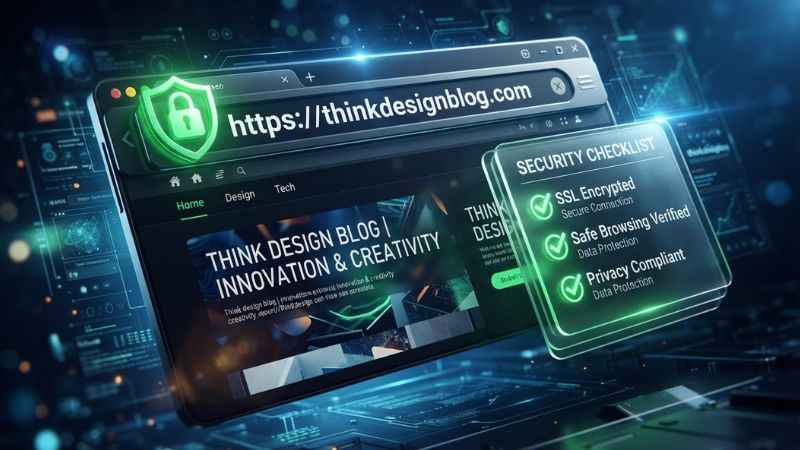
Is ThinkDesignBlog.com Safe and Legitimate?
When visiting any unfamiliar site, evaluate both its technical safety and its editorial quality.
┌─────────────────────────────────────────────────────────────┐
│                       SAFETY CHECK                          │
├──────────────────────────────┬──────────────────────────────┤
│      TECHNICAL SAFETY        │      EDITORIAL QUALITY       │
│  • HTTPS Encryption          │  • Clear Bylines & Authors    │
│  • No Suspicious Downloads   │  • Transparent Disclosures   │
│  • Security Scans            │  • Current Update Dates      │
└──────────────────────────────┴──────────────────────────────┘
Technical Safety
Technical safety refers to whether a website poses risks like malware or unauthorized redirects.
- HTTPS Encryption: The site is accessible via HTTPS.
- Security Scans: Web safety tools like Google Safe Browsing monitor public sites for malicious code. One available third-party scan reported no detected threats at the time of scanning. This does not guarantee ongoing or page-level safety.
- Browser Warnings: If your browser ever shows a red warning screen or attempts an automatic file download, close the tab immediately.
Editorial Legitimacy
Editorial legitimacy measures whether an article is accurate, objective, and well-researched. Technical security alone does not guarantee high editorial standards.
To judge an article’s reliability:
- Author Expertise: Check if the writer demonstrates hands-on experience with the design tool or gadget.
- Testing Methods: Look for details on how a product was tested, rather than generic feature summaries.
- Sources: Look for outbound links to reputable organizations, such as the World Wide Web Consortium (W3C) for web standards or the Nielsen Norman Group for user experience research.
- Affiliate Disclosures: Trustworthy tech blogs disclose if they earn a commission when you buy products through their referral links.
Technical Safety vs. Editorial Trust
A site can be completely safe from viruses while still publishing outdated opinions or unverified product recommendations. Always separate security from factual accuracy when reading online content.
ThinkDesignBlog.com vs. Similar Websites
Several websites use “Think Design” in their name. Distinguish the website at thinkdesignblog.com from separate, un-affiliated entities.
| Brand / Name | Exact Domain | What It Is | Affiliated with ThinkDesignBlog.com? |
| ThinkDesignBlog | thinkdesignblog.com | Design, UI/UX, and technology blog | Reviewed Website |
| Think Design | think.design | Design agency and strategic insights site | No direct affiliation was established in this review |
| ThinkDesign | thinkdesign.com | Digital product and design agency | No direct affiliation was established in this review |
| ThinkDesignBlog.org | thinkdesignblog.org | Separate similarly named domain | Affiliation unverified |
| The Think Design Blog | thethinkdesignblog.com | Similarly named domain | Affiliation and ownership not verified |
Tip: Always check the URL in your browser’s address bar to ensure you are on thinkdesignblog.com before relying on its content or following internal links.
What Makes a Useful ThinkDesignBlog Article?
Not every post on a multi-topic blog carries the same depth. Recognizing strong content helps you locate useful guides faster.
Strong Design Tutorial Signals
A practical design tutorial usually includes:
- A clear goal statement (for example, “How to build a responsive navigation bar in Figma”).
- Step-by-step instructions accompanied by labeled screenshots.
- Explicit mention of software version numbers.
- Considerations for mobile responsiveness and digital accessibility.
Strong Product-Guide Signals
A reliable tech or gadget guide includes:
- Real-world details (such as battery runtime or comfort over several hours).
- A clear pros-and-cons section.
- Specific comparisons against direct alternatives.
- Up-to-date pricing or model years.
Weak-Content Warning Signs
Be cautious if an article features:
- Broad, repetitive introductions without practical steps.
- Missing author names or missing publication dates.
- Claims that a product is “the absolute best” without comparison data.
- Broken image links or screenshots showing obsolete app interfaces.
Recommended Starting Points
To explore ThinkDesignBlog.com effectively, pick a starting topic based on your current project:
- For Web Design Foundations: Look for guides on basic wireframing and grid alignment.
- For UI/UX Tooling: Search for Figma tutorials covering variables, styles, components, responsive layouts, and handoff.
- For Freelance Growth: Read articles detailing portfolio presentation, client proposals, and invoicing apps.
- For Workstation Upgrades: Check noise-canceling headphones and other hardware categories confirmed by a specific page; otherwise use home-office equipment.
Common Questions About ThinkDesignBlog.com
What is ThinkDesignBlog.com?
ThinkDesignBlog.com is an online publication covering web design, UI/UX workflows, product design, and general technology. It publishes practical tutorials, software guides, and home-office setup content.
Is ThinkDesignBlog.com the official website?
The website reviewed here is located at thinkdesignblog.com. Always check your browser address bar to verify you are on this exact URL rather than a similarly named site.
Is ThinkDesignBlog.com still active?
The homepage displayed articles dated September 12–17, 2026 when checked.
Is ThinkDesignBlog.com safe to visit?
The site is accessible via HTTPS, and one available third-party scan reported no detected threats at the time of scanning. This does not guarantee ongoing or page-level safety. However, always evaluate individual articles for current dates and clear author information to ensure editorial quality.
Is ThinkDesignBlog.com related to Think Design?
The domains appear as separate websites in the available search results; no direct affiliation was established in this review. Check official About or Contact pages on the respective sites to confirm affiliation.
Does ThinkDesignBlog.com publish UI/UX content?
Yes, the site includes UX-related, wireframing, Figma, accessibility-related, and digital-product articles.
Is ThinkDesignBlog.com suitable for beginners?
Yes, the site includes beginner-oriented wireframing and typography content, along with software-related guides. Beginners should verify that older tutorials match the current version of the software they use.
Does ThinkDesignBlog.com review gadgets and software?
Yes, the site publishes buying guides, comparisons, and articles about laptops, headphones, home-office tools, invoicing software, and project-management software.
Editorial Methodology and Last-Checked Date
This guide was created by analyzing the live structure, visible articles, and public trust signals of thinkdesignblog.com on September 24, 2026.
- Pages Reviewed: Specific URLs and pages reviewed on September 24, 2026 include the homepage and category archives (including Web Design, Tech, Gadgets, Guide, Review, and Insights).
- Verification Methods: Address bar inspection and entity comparison against similarly named domains.
- Evaluation Focus: Distinguishing technical domain safety from editorial quality and identifying practical navigation paths for different reader types.
- Recommended Next Step: Visit ThinkDesignBlog.com directly. Select a visible category such as Web Design, Tech, Gadgets, How-To, Guide, or Review, depending on your goal, and check the publication date on your chosen article before applying its recommendations.
You May Also Like:
MagFuseHub Com: What It Is, Is It Safe, and Should You Trust It? (2026 Guide)
Renvoit.com (2026): What It Is, Is It Safe, and Should You Use It?

Joseph Quinn is the founder and editor of Punspa, a technology-focused website covering technology, website reviews, internet terms, and other things worth figuring out online. He writes and edits the site’s technology and web content, with a focus on clear, useful explanations. He also enjoys humor and wordplay, which occasionally leads him to write a pun-related article just for the fun of it.