WBU stands for “What About You?” in digital text chat. It is a popular informal texting abbreviation and initialism used in instant messaging to ask for someone else’s opinion, status, or plans after sharing your own. People use it to keep conversations flowing quickly without typing out the full phrase.
- Meaning: What About You?
- Tone: Informal, casual, friendly
- Common Contexts: Popular messaging apps, SMS, and social media platforms
WBU Full Form in Chat: Quick Definition & Meaning
What WBU Stands For
The full form of WBU in chat is “What About You?”. It is a short text abbreviation and initialism used across mobile apps and social media.
Why People Use It
People use WBU to save time when typing on smartphones. It acts as a conversational bridge. When you share something about your day, adding WBU turns the prompt back to the other person. This shows interest in their life and prevents the conversation from stalling.
How WBU Is Used in Real Chats (With Examples)
Everyday Examples
In casual texting, WBU usually comes at the end of a sentence. It works well for status check-ins, personal opinions, and daily plans.
- Status Check: “Just finished my final exam! WBU?”
- Plans: “I am heading to the gym now. WBU?”
- Opinions: “I really loved the new movie. WBU?”
Platform-Specific Examples
Different social media apps have unique communication styles. Here is how WBU fits into daily platform habits:
- Snapchat: Often sent alongside quick photo snaps or streak updates.
- Example: A photo of a coffee cup with the text: “Need this today, WBU?”
- WhatsApp: Used in both individual chats and active group messages to coordinate plans.
- Example: “I am grabbing lunch at 1 PM. WBU guys?”
- Instagram DMs: Common in reaction to shared Stories or Reels.
- Example: “I am definitely going to this concert! WBU?”
| Platform | Typical Context | Sample Message |
| Group planning or daily updates | “I am free this weekend. WBU?” | |
| Snapchat | Quick visual updates or streak replies | “Study session all night 😭 WBU?” |
| Story replies and casual direct messages | “Loved the new album! WBU?” |
WBU vs HBU vs WBY: What’s the Difference?
Core Meanings and Nuances
WBU, HBU, and WBY all serve the same basic purpose in text messages. They show reciprocity and keep the conversation balanced.
- WBU: What About You?
- HBU: How About You?
- WBY: What About You? (An alternative initialism for WBU, where “Y” is used as the common texting shorthand for “You”)
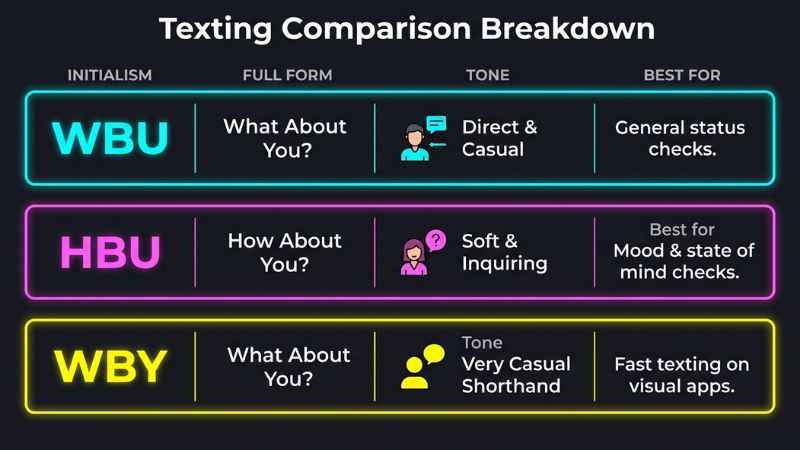
While WBU and WBY map to “What About You?” and HBU maps to “How About You?”, all three initialisms function similarly in casual chat and can usually be swapped without changing the core message.
Tone and Preference
While functionally similar, minor differences exist in how these abbreviations are phrased and used.
| Initialism | Full Form | Tone | Best Used For |
| WBU | What About You? | Casual, direct | General opinion checks and quick daily status updates. |
| HBU | How About You? | Soft, inquiring | Checking in on someone’s mood, state of mind, or current activity. |
| WBY | What About You? | Very casual | Fast texting across messaging apps and social platforms. |
How to Reply to “WBU?” (Ready-to-Use Templates)
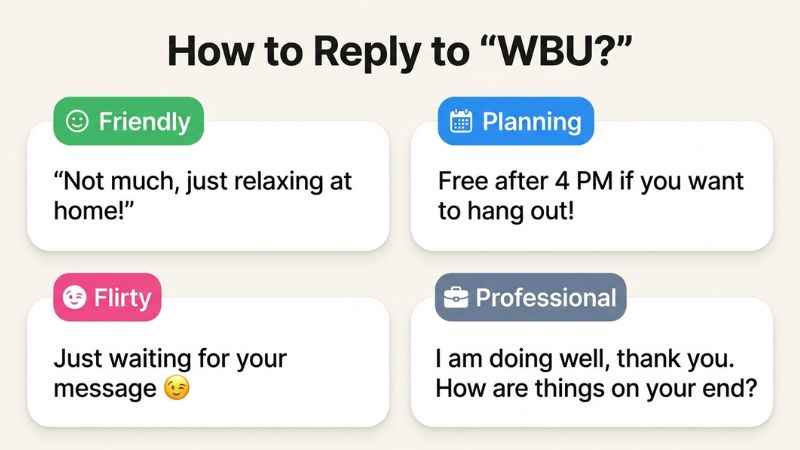
When someone sends you “WBU?”, they want to know what you are doing, feeling, or thinking. Here are clear template replies organized by intent:
Friendly & Casual Replies
- “Not much, just relaxing at home!”
- “Just finished work, feeling pretty tired.”
- “Same here! Just watching TV.”
Planning Replies
- “I am free after 4 PM if you want to hang out!”
- “Still figuring out my weekend plans, honestly.”
- “Heading out for dinner soon.”
Flirty & Playful Replies
- “Just sitting here waiting for your message 😉”
- “Thinking about what we should do this weekend.”
- “Bored… come save me!”
Professional Alternatives (For work contexts)
- “I am doing well, thank you. How are things on your end?”
- “My week has been productive. How is your project coming along?”
- “I share a similar view. What are your thoughts on this?”
Is WBU Rude, Dry, or Too Casual?
When WBU Feels Friendly vs. “Dry”
WBU is not inherently rude, but context matters. Sending only “WBU?” without any other words can sometimes come across as lazy or “dry texting.” It might look like you are not fully engaged in the conversation.
- Dry: “Good. WBU?”
- Engaging: “I had a great day! Went for a long walk. WBU?”
Emoji and Context Tips
To avoid sounding blunt, pair WBU with punctuation, emojis, or follow-up details. Emojis help add warmth and intent to short abbreviations.
- “Just got home! 🏠 WBU?”
- “Starving right now 🍕 WBU?”
Formal and Professional Settings
Do not use WBU in professional emails, work communications on Slack, or messages to clients. It is overly casual and can look unprofessional. Always write out full sentences when speaking with supervisors, clients, or formal acquaintances.
When Not to Use WBU (And What to Say Instead)
Using WBU is fine for friends, but bad for formal contexts or sensitive discussions.
1. Work Emails and Professional Messaging
- Avoid: “I finished the report. WBU?”
- Use instead: “I have completed the report. How is your progress coming along?”
2. Serious or Sensitive Conversations
- Avoid: “I am sorry to hear that. WBU?”
- Use instead: “I am so sorry you are dealing with that. How are you holding up?”
3. First-Time Professional Contacts
- Avoid: “Thanks for connecting! WBU?”
- Use instead: “Thank you for connecting. I hope you are having a great week.”
Common Mistakes & How to Fix Them
- Mistake 1: Overusing short initialisms. Sending single-abbreviation replies constantly makes chats feel one-sided.
- Fix: Add 1-2 extra sentences sharing a detail before asking “WBU?”.
- Mistake 2: Using WBU with formal contacts.
- Fix: Spell out the full phrase “How about you?” or “What about you?” in professional settings.
- Mistake 3: Confusing WBU for a greeting. WBU requires context. You cannot open a chat with “WBU?”.
- Fix: Start with a greeting like “Hey! How are you?” instead.
FAQ: WBU Full Form in Chat
What does WBU mean in chat?
WBU stands for “What About You?”. It is used in informal text conversations to ask for someone else’s input, plans, or current status.
What is the full form of WBU?
The full form of WBU is “What About You?”.
Is WBU the same as HBU?
While WBU maps to “What About You?” and HBU maps to “How About You?”, they serve the same functional purpose in casual chat and are often used interchangeably.
What’s the difference between WBU and WBY?
There is no difference in core meaning. WBY is an alternative initialism for “What About You?”, where the letter “Y” is used as a common texting shorthand for “you”.
Is WBU rude or dry texting?
WBU is not inherently rude, but sending it as a single-word reply without emojis or additional details can feel lazy or dry.
Can I use WBU in formal messages?
No, WBU should be avoided in formal messages, work emails, and professional chats. Use full phrases like “How are you doing?” instead.
What does WBU mean on Snapchat, WhatsApp, or Instagram?
Across digital messaging platforms, WBU retains its standard meaning: “What About You?”. It is used to prompt the other person to share their thoughts or updates.
Why is it “WBU” and not “WAU”?
The initialism uses “U” because “U” is a standard texting shorthand for the word “you”.
When should I avoid using WBU?
Avoid using WBU in workplace communications, client emails, job interviews, or when discussing sensitive emotional topics.
Quick Reference: WBU at a Glance
WBU (“What About You?”) is an essential internet texting abbreviation designed to keep casual conversations moving smoothly. It allows speakers to return a question quickly without typing out full sentences.
- Chat Example 1: “I am grabbing tacos for lunch 🌮 WBU?”
- Chat Example 2: “Just finished studying for history! WBU?”
- Chat Example 3: “Not doing much this weekend. WBU?”
To keep your text exchanges engaging, pair WBU with a short update about yourself, and save full-sentence variations for professional contexts.
You May Also Like:
What Does TBD Mean? Definition, Examples, and How It Differs From TBA and TBC
HBU Full Form: Meaning, Usage, and Examples (2026)

Joseph Quinn is the founder and editor of Punspa, a technology-focused website covering technology, website reviews, internet terms, and other things worth figuring out online. He writes and edits the site’s technology and web content, with a focus on clear, useful explanations. He also enjoys humor and wordplay, which occasionally leads him to write a pun-related article just for the fun of it.