:/ is a text emoticon that usually shows mild disappointment, uncertainty, skepticism, or annoyance like a tilted something feels off face. It is not always a sign that someone is angry. Read the words around it to tell whether the person means meh, I am doubtful, that is awkward, or I am frustrated.
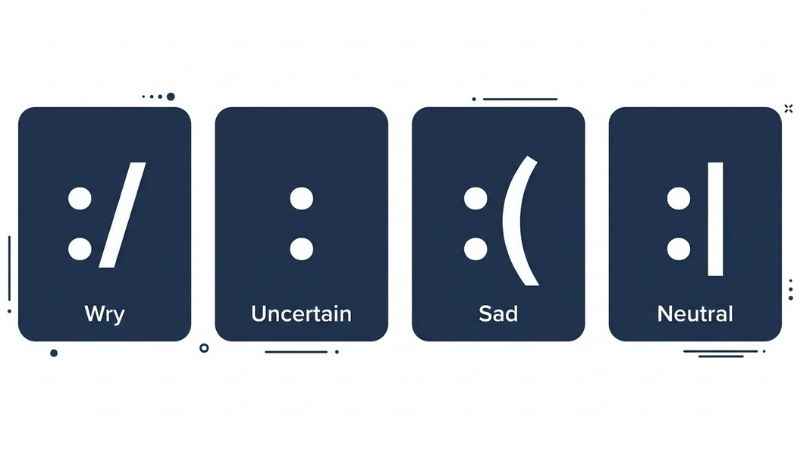
This typed character face is made using a colon for eyes and a forward slash for a slanted, crooked, or pursed mouth. Some reference lists describe :/ and :\ as wry emoticons. In everyday use, the expression can be interpreted differently depending on context.
Mild disappointment when plans or expectations fall short.
Skepticism or doubt when a statement sounds hard to believe.
Awkwardness or mild confusion during an unexpected moment.
Resigned frustration when dealing with a minor annoyance.
What Does :/ Mean in Texting?
The simplest interpretation: something feels off
The emotional center of this symbol is a low intensity, mixed negative reaction. It is typically softer than a direct insult, a furious emoji, or an outright sad face. When someone sends it, they usually feel slightly unsettled, unsure, or underwhelmed by a situation.
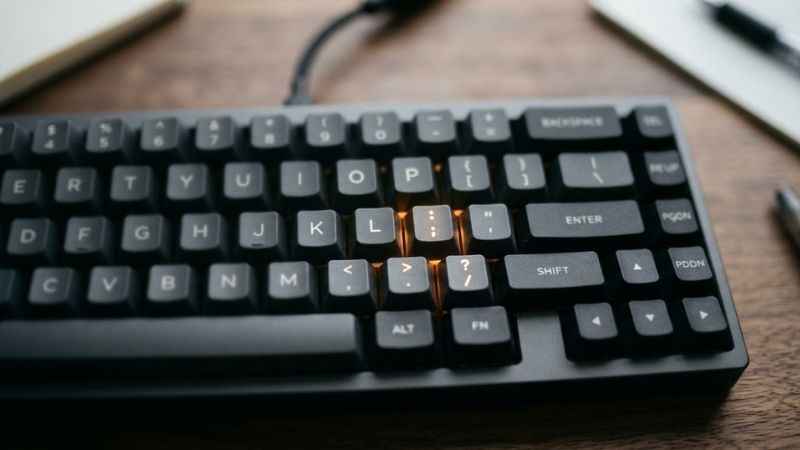
The four most common meanings of :/
| Meaning | What it feels like | Typical wording around it |
| Mild disappointment | Hopes were let down just a little bit | The train is delayed again :/ |
| Skepticism | Doubt about a claim or excuse | He said he will pay you back tomorrow :/ |
| Awkwardness | Uncomfortable or unexpected timing | Oh, I thought you meant today :/ |
| Mild annoyance | Bothered by a repetitive problem | Another last minute meeting :/ |
One online slang-reference source lists :/ as expressing indecision, skepticism, exasperation, and annoyance. This overlap is why surrounding language matters so much for getting the right read.
How to Tell What :/ Means From Context
Read the words before the emoticon
Bad news statements lean toward disappointment. Claims, promises, or excuses lean toward skepticism. Misunderstandings lean toward awkwardness. Repeated problems lean toward mild annoyance.
Consider whether :/ appears alone or after a sentence
:/ alone can be a compact I have reservations reaction. After a sentence, it modifies the tone of that sentence. It adds a slight hesitation to whatever words came right before it.
Use conversation history, not stereotypes
Sender habits, the relationship, prior messages, and the topic matter more than whether the sender is a guy or girl. Text symbols lack an official universal definition, so you have to rely on how that specific person usually communicates.
Four realistic examples, decoded
| Example Message | Likely Reading | Alternate Reading | Suitable Reply |
| The train is delayed again :/ | Resigned frustration | Mild anger | That is so annoying. Are you going to be late? |
| He said he will pay you back tomorrow :/ | Skepticism | Doubt | Fair point. Do you think he forgot again? |
| Oh, I thought you meant today :/ | Awkward disappointment | Confusion | My bad. Did I mix up the dates? |
| Another last minute meeting :/ | Mild annoyance | Fatigue | Ugh, sorry. Do you have to join? |
Is :/ Sad, Annoyed, Confused, or Sarcastic?
All four readings can occur, but none is guaranteed. Sadness is more likely when paired with a loss, hurt, or regret. Annoyance is more likely after inconvenience or repetition. Confusion is more likely after unclear information. Skepticism or sarcasm is more likely after a doubtful claim or contradictory statement.
This emoticon normally expresses milder, more ambiguous emotion than sad faces or explicit complaints. Cambridge University reported research on how emoticons were used on Twitter and noted that emoticon meanings can develop within online communities, whereas reference lists classify it more broadly as a wry face.
| If you see this context | Likely meaning | Intensity level |
| Paired with bad news | Disappointed | Low to moderate |
| Paired with a bold claim | Skeptical | Low |
| Paired with a schedule change | Annoyed | Low to moderate |
| Paired with a mistake | Awkward | Low |
:/ vs. Similar Text Faces and Emoji
:/ vs. :\
Reference lists commonly label both :/ and :\ as wry emoticons; users may interpret either one differently depending on context. No formal Unicode standard assigns separate meanings to :/ and :; common interpretations may vary by person or online community.
:/ vs. :(, :|, :S, and -_-
- 🙁 means clearer sadness or unhappiness.
- 😐 is a neutral, blank, or restrained response.
- :S is commonly used online to suggest confusion or unease, though its exact tone depends on the sender and context.
- -_- is often used online to convey tiredness, annoyance, or an unimpressed reaction, but usage varies.
:/ vs. 😕, 🙁, 😒, and 🙄
Unicode emoji are pictographs used inline in text, while emoticons are character sequences intended to represent facial expressions or gestures. Either can be interpreted differently depending on context and platform design. Some people use typed emoticons such as :/ in casual, text-based conversation; the intended tone depends on the writer and context.
| Expression | Typical Tone | Intensity | Best Use Case |
| :/ | Wry, uncertain, mildly off | Low | Quick, casual text chat |
| 🙁 | Frowning, sad | Moderate | Showing clear unhappiness |
| 😒 | Unamused, side eye | Moderate to high | Expressing mild disdain |
| 🙄 | Eye roll, exasperated | Moderate to high | Playful or direct annoyance |
What Does :/ Mean When Someone Sends It to You?
It may be about the situation, not you
:/ may react to an external situation or to something the recipient said. The surrounding conversation is needed to tell which. If someone sends it after a scheduling update or a traffic report, they are reacting to the hassle, not blaming you.
What :/ means from a guy or girl
The core symbol does not have a gender specific definition. Use the words, relationship, conversation topic, and sender usual style instead of trying to guess hidden meanings based on gender.
Is :/ rude?
It can feel dismissive in a tense exchange, but it is usually milder than direct criticism. In a tense or sensitive conversation, :/ can be perceived as dismissive or passive-aggressive. Whether it feels rude depends on the relationship, timing, wording, and prior conversation.
- Do: Look at the wider conversation before reacting.
- Do: Ask a calm question if you feel confused.
- Don’t: Assume the sender is yelling or angry right away.
- Don’t: Overthink a single punctuation mark.
How to Reply to :/
- If it seems like disappointment: Say, “Yeah, that is frustrating. Want to figure out another option?”
- If it seems like skepticism: Say, “Fair point, what makes you doubtful?”
- If it seems like awkwardness or confusion: Say, “I may have explained that badly. I meant…”
- If you genuinely cannot tell: Say, “Are you okay with that, or does something feel off?”
When clarity matters, a calm clarification can be preferable to assuming the sender is angry. It keeps communication open without creating unnecessary drama.
Is :/ an Emoji or an Emoticon?
- Emoticon: Emoticons are sequences of text characters—typically punctuation, symbols, and sometimes letters—used to represent a facial expression or gesture.
- Emoji: Emoji are Unicode characters or character sequences that platforms render using their own fonts, glyphs, or images.
- Kaomoji: Kaomoji are text-based facial expressions commonly associated with East Asian online communication and are generally read upright rather than sideways, for example ^-^.
:/ is a text emoticon made from Unicode punctuation characters; the two-character sequence is not a separately encoded Unicode emoji.
| Feature | Emoticon | Emoji |
| Construction | Emoticons are sequences of text characters—typically punctuation, symbols, and sometimes letters—used to represent a facial expression or gesture. | Emoji are Unicode characters or character sequences that platforms render using their own fonts, glyphs, or images. |
| Platform stability | Text emoticons generally preserve their character sequence across platforms, although fonts, formatting, and app behavior can affect their appearance or interpretation. | Emoji design and support can vary by platform, device, operating system, app, and emoji font; some sequences may not display consistently everywhere. |
| Origin | Emoticons became widely used in computer-mediated communication and are commonly formed from text characters. | Emoji originated in Japanese mobile communication and later became standardized for cross-platform text use through Unicode. |
Frequently Asked Questions About :/
What does :/ mean in a text message?
It usually signals mild dissatisfaction, doubt, or a feeling that something is slightly off. It is softer than an angry or deeply sad face.
What does :/ mean by itself?
When :/ is sent by itself, it can function as a brief reaction. Its meaning may range from uncertainty to dissatisfaction depending on the surrounding conversation.
What does :/ mean from a guy?
It means the exact same thing as it does from anyone else. The meaning comes from the sentence context, not the gender of the sender.
What does :/ mean from a girl?
It shares the same core meaning of uncertainty, awkwardness, or mild annoyance. Rely on the conversation topic rather than gender assumptions.
Is :/ the same as 😕?
They share a similar visual meaning, but :/ is a typed keyboard emoticon while 😕 is a standardized emoji. Emoji are pictographs that may be displayed in color and may vary in design across platforms, while :/ remains a text-character emoticon.
What does :\ mean in a text?
Reference lists group :/ and :\ as wry emoticons. Their precise use can vary between writers and communities.
Is :/ passive-aggressive?
It can feel that way if it is dropped into a conversation without explanation during a disagreement. Most of the time, however, it simply shows mild discomfort.
Is :/ still used?
:/ is still encountered in some text-based online conversations. Its frequency varies by platform, community, age group, and individual writing style.
The meaning of :/ depends heavily on context, while the symbol itself conventionally suggests a wry, uncertain, or mildly negative reaction. Read the entire message, look at the situation, and ask a calm follow up question if clarity matters to your relationship.
You May Also like:
What Does STSU Mean in Text? Tone, Examples & Other Meanings
CPO Meaning: Certified Pre-Owned Cars, Chief Product Officer & More

Joseph Quinn is the founder and editor of Punspa, a technology-focused website covering technology, website reviews, internet terms, and other things worth figuring out online. He writes and edits the site’s technology and web content, with a focus on clear, useful explanations. He also enjoys humor and wordplay, which occasionally leads him to write a pun-related article just for the fun of it.