If you are wondering what does WLW mean in text messages, dating profiles, or social media bios, it stands for “women loving women.” People use this acronym as an umbrella term for any woman who feels romantic or sexual attraction to other women.
In everyday texting, someone might send “Are you WLW?” to ask if you are attracted to women, or use it to describe a relationship, book, or online community. It covers lesbians, bisexual women, pansexual women, and other queer women under one simple label.
WLW Definition: What Does WLW Stand For?
Direct Answer: WLW stands for “women loving women” (or “woman loving woman”). It is an LGBTQ+ acronym that describes women who are attracted to women. This includes lesbian, bisexual, pansexual, and queer women. You will often see it in text messages, dating profiles, and social media posts.
| Detail | Information | Meaning / Usage Notes |
| Pronunciation | W-L-W (double-u, ell, double-u) / “wuh-luh-wuh” | Spoken out loud letter-by-letter, or phonetically (“wuh-luh-wuh”) in casual speech and TikTok videos. |
| Full Form | Women Loving Women / Woman Loving Woman | An umbrella phrase for women attracted to other women. |
| Primary Context | Text messages, bios, dating apps, and pop culture | Commonly used in online chats, social media profiles, dating app filters, and BookTok/media reviews. |
While the acronym is very popular on phone screens, you can also say “women loving women” out loud. People use it to group together different identity labels without leaving anyone out.
How Is WLW Used in Texting and Social Media?
In digital communication, WLW acts as a quick shortcut. It signals your sexual orientation, identifies the genre of a book, or helps you find similar people online.
| Context | Example Sentence | Meaning / Explanation |
| Direct Messaging | “Hey! Just wanted to ask, are you wlw?” | Asking someone about their relationship preference or identity. |
| Friendship / Community | “Looking for wlw friends in my area to hang out with.” | Searching for like-minded friends who share a similar identity. |
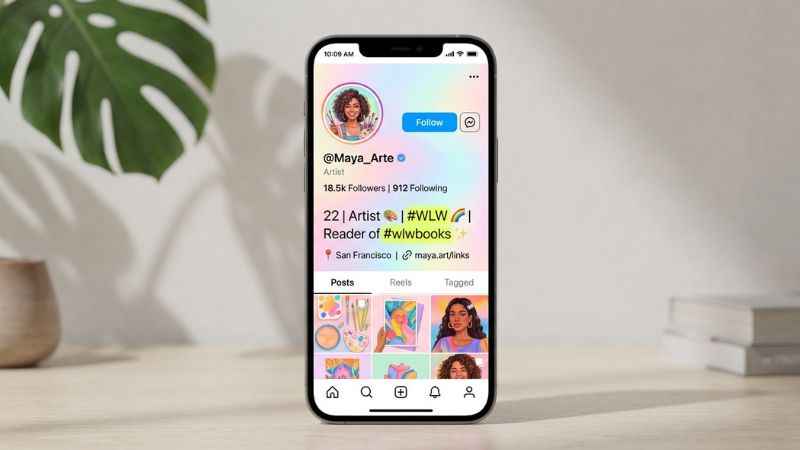
| Social Media Bios | “Check out her bio, she has the #wlw tag in it.” | Using a hashtag on a profile to indicate personal identity. |
| Books & Media | “I just finished reading a really good wlw romance novel!” | Describing media centered on female-focused romantic relationships. |
Usage Across Platforms
- Dating Apps (Her, Tinder, Bumble): Users add “WLW” to their bios to show who they want to meet. It helps filter out unwanted messages and connects people with similar goals.
- TikTok: People use the hashtag
#wlwon videos about relationships, dating advice, and queer culture. - Instagram & Snapchat: It shows up in profile descriptions, story highlights, and post captions as a community marker.
- Text Messages: Friends use it in casual chat when talking about crushes, dating histories, or relationship advice.
Who Uses the Term WLW?
The term WLW is inclusive by design. It brings together people who share a common experience of loving women, regardless of their specific identity label.
- Lesbian women: Women who are exclusively attracted to other women.
- Bisexual women: Women attracted to two or more genders, including women.
- Pansexual women: Women attracted to people regardless of their gender identity.
- Queer women: Women who prefer an open or non-traditional label for their orientation.
- Non-binary individuals: Some non-binary people who feel connected to womanhood or female-aligned romance also use the term. However, many non-binary people prefer the broader term “sapphic,” which explicitly includes non-binary individuals alongside women.
Why Choose WLW Over Other Labels?
Some people prefer WLW because it avoids rigid boxes. A bisexual woman might feel that calling herself a lesbian is inaccurate, but “WLW” lets her express her attraction to women without hiding her bisexuality.
Cultural Origins
The phrase “women loving women” was used by lesbian feminists in the 1970s (late 20th century), with some evidence suggesting earlier usage in Black communities during the Harlem Renaissance (early 20th century). However, the exact origin is contested and not definitively documented.
WLW vs. Lesbian vs. Sapphic: What’s the Difference?
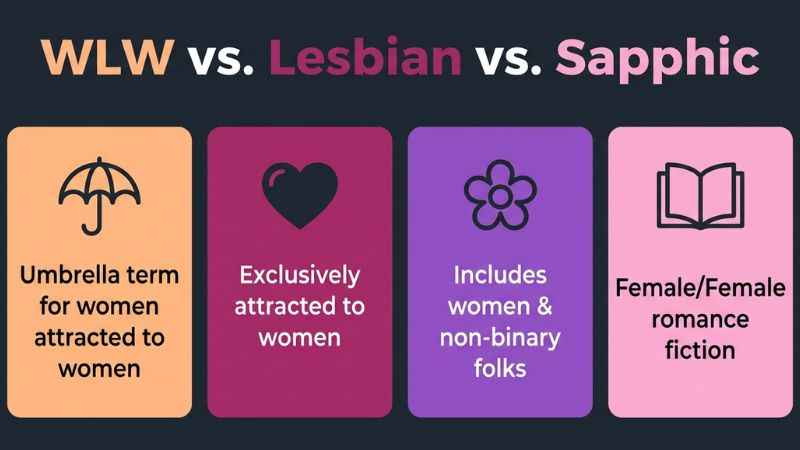
Because there are many identity terms, it is easy to mix them up. The chart below breaks down how WLW compares to similar labels.
| Term | Full Meaning | Who Does It Include? | Typical Context |
| WLW | Women Loving Women | Women (lesbian, bi, pan, queer) attracted to women | Social media, text slang, dating bios |
| Lesbian | Lesbian | Women who are exclusively attracted to women | Personal identity, formal contexts |
| Sapphic | Named after the poet Sappho | Women AND non-binary people attracted to women | Literature, history, inclusive communities |
| F/F | Female / Female | Fictional relationships between two female characters | Fan fiction, book tags, media reviews |
WLW in Romance Books, Fan Fiction, and Media
The term has spread far beyond text messages. It is now a primary category in publishing, entertainment, and fandoms.
Books and “BookTok”
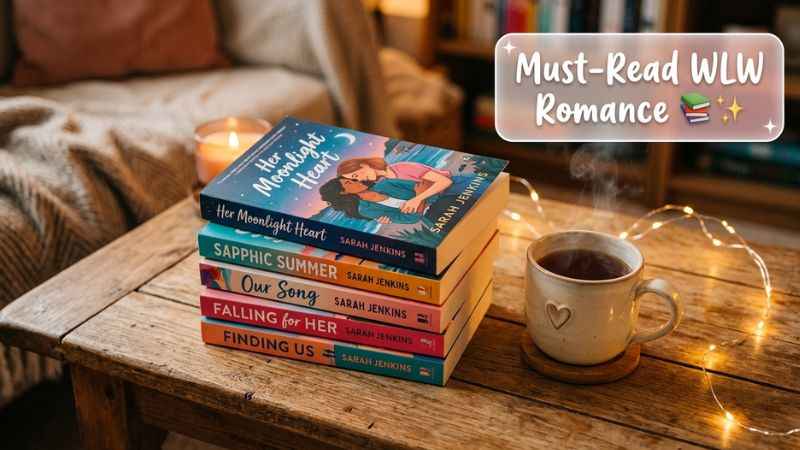
Readers search for “WLW books” when they want stories centered on romance between women. On TikTok’s reading community (BookTok), creators use the #wlwbooks tag to review popular titles, young adult fiction, and fantasy novels featuring female couples.
Fan Fiction and Media
On platforms like Archive of Our Own (AO3) and Wattpad, writers tag their stories with “WLW” or “F/F” so readers can easily find them. Television shows like The L Word and animated series like She-Ra and the Princesses of Power are frequently discussed online as key examples of WLW representation.
Common Misconceptions About WLW
- Misconception 1: “WLW means the exact same thing as lesbian.”Correction: WLW is a broader umbrella term. All lesbians are WLW, but not all WLW are lesbians (many are bisexual or pansexual).
- Misconception 2: “WLW is just an internet joke or meme.”Correction: While it is popular in social media memes, WLW is a meaningful community term with real history.
- Misconception 3: “WLW excludes trans women.”Correction: WLW fully includes trans women. Trans women are women, and their relationships are a key part of the WLW community.
How to Use WLW Respectfully
For Community Members
Feel free to use WLW in your bio, texts, or posts if it fits your life. Always respect individual preferences, as some people prefer specific terms like “lesbian” or “bisexual.”
For Allies
If you are an ally, you can use WLW to describe media, books, or broad communities (for example: “I love reading WLW romance books”). Avoid using it as a direct personal label for someone else unless they use it for themselves first.
FAQ: Your WLW Questions Answered
What does WLW mean in text slang?
In text messages, WLW stands for “women loving women.” It is a short way to describe women who are attracted to other women, including lesbian, bisexual, and pansexual women.
What does WLW mean on TikTok?
On TikTok, WLW refers to content created by or for women attracted to women. You will see it as a hashtag (#wlw) on videos about dating, relationship humor, queer fashion, and book recommendations.
What does WLW mean on Snapchat?
On Snapchat, WLW appears in user bios, text chats, and story captions. It signals that a person is interested in women or belongs to the queer women’s community.
What does it mean if a girl says she is WLW?
If a girl says she is WLW, it means she experiences romantic or sexual attraction to women. She might be a lesbian, bisexual, pansexual, or queer.
Is WLW the same as lesbian?
No, WLW is not the exact same as lesbian. Lesbian usually refers to women who are exclusively attracted to women, while WLW includes anyone who loves women, including bisexual and pansexual women.
Can non-binary people use WLW?
Some non-binary people use WLW if they feel a strong connection to womanhood or female-aligned relationships. However, many non-binary people prefer the broader term “sapphic.”
What is the difference between WLW and sapphic?
WLW specifically uses the word “women,” while “sapphic” is an umbrella term that explicitly includes both women and woman-aligned non-binary people who love women.
Where did the term WLW come from?
The phrase “women loving women” was used by lesbian feminists in the 1970s, with some evidence suggesting earlier usage in Black communities during the Harlem Renaissance. However, the exact origin is contested.
Learn More: Related LGBTQ+ Terms and Resources
If you are learning about identity terms, here are a few related acronyms and concepts to explore next:
- MLM: Stands for “men loving men.” The male equivalent of WLW, covering gay, bisexual, and pansexual men.
- Sapphic: An umbrella term for women and non-binary people who are attracted to women.
- Achillean: An umbrella term for men and non-binary people who are attracted to men.
- QPR: Stands for “queerplatonic relationship,” describing a close, non-romantic relationship that goes beyond traditional friendship.
To continue exploring, check out online guides from major LGBTQ+ organizations like GLAAD or the Trevor Project, or browse online communities like Reddit’s r/actuallesbians and r/lgbt.
Next Step: If you saw WLW in a book review or social media post, try searching the #wlwbooks or #wlw hashtag on your favorite app to see how creator communities put the term into practice today.
You May Also Like:
What Does IWK Mean in Texting?
YKTV Meaning: What “You Know the Vibe(s)” Means in Texts and Social Media
Joseph Quinn is the founder and editor of Punspa, a technology-focused website covering technology, website reviews, internet terms, and other things worth figuring out online. He writes and edits the site’s technology and web content, with a focus on clear, useful explanations. He also enjoys humor and wordplay, which occasionally leads him to write a pun-related article just for the fun of it.