If you are looking up thestripesblog frank fisher alongside terms like “social media stuff embedtree,” you are likely trying to understand how social media feeds connect to website hubs. Frank Fisher’s coverage on The Stripes Blog reportedly focuses on beats like fashion, lifestyle, gaming, and crypto commentary. Beyond individual creator beats, a big topic among site owners is how creators and business owners organize their social feeds on their own websites without slowing down page load times.
The phrase “social media stuff embedtree” appears in many recent articles and online guides, but it confuses a lot of readers. It usually refers to two different things: the “Social Media Stuff” category on the EmbedTree.com blog, or the general practice of building a “tree” of embedded social feeds on a site.
This guide breaks down what the phrase means, how embedding works, and how to build your own social content hub without ruining your website.
What “Social Media Stuff EmbedTree” Actually Means
People use the phrase “social media stuff embedtree” in two main ways. Clearing up this mix-up makes it much easier to choose the right tools for your website.
“Social Media Stuff EmbedTree” Means Two Things:
- 1. EmbedTree.com Category
- A blog category for posts on social trends and media tips.
- 2. Social Tree Practice
- Embedding live feeds (videos, posts) into a central web hub.
Two Common Meanings You Will See Online
- EmbedTree.com’s “Social Media Stuff” Category: EmbedTree.com is a content blog that publishes posts across games, software, tech, and social media topics. “Social Media Stuff” is simply a category name on their site where they group articles about social media trends, news, and tips.
- The Social Content Tree Practice: Some articles and guides use “embedtree” loosely to mean taking live posts from Instagram, TikTok, YouTube, and X (Twitter) and arranging them into a single, organized page on a personal site.
Why the Confusion Happens
Marketing team jargon causes most of this confusion. Companies throw around terms like “link hub,” “embed tree,” and “social widget” to sound unique. Official developer documents refer to these mechanisms as oEmbed, embed codes, iframes, or API-based widgets.
Some older web projects used the name “EmbedTree,” but the current embedtree.com is a blog, not the same service. When tech and multi-niche blogs write about these topics, they often mention both the general strategy and specific blog categories together. That leads readers to search for the whole phrase as if it were a single product.
How Embedding Social Content Works (The Right Way)
You do not need to be a software developer to put social posts on your website. You can add social media content to your pages using three main methods.
Native Embed Codes (oEmbed/iframe)
Most social networks give you a snippet of free code to share posts.
- How it works: You click “Share” or “Embed” on a public post, copy the code, and paste it into your site HTML.
- Best for: Displaying single posts, specific YouTube videos, or individual TikToks.
- Pros: Free, lightweight, and official.
- Cons: You must update the code manually every time you create a new post.
CMS Embed Blocks
Website builders like WordPress, Wix, and Shopify have built-in tools for social media.
- How it works: You paste a simple link (like a YouTube video link) directly into an editor block, and the CMS converts it into a visual preview.
- Best for: Adding occasional videos or posts into blog articles.
- Pros: Easy to use and requires zero coding.
- Cons: Limited layout options and slower performance if you add too many blocks to one page.
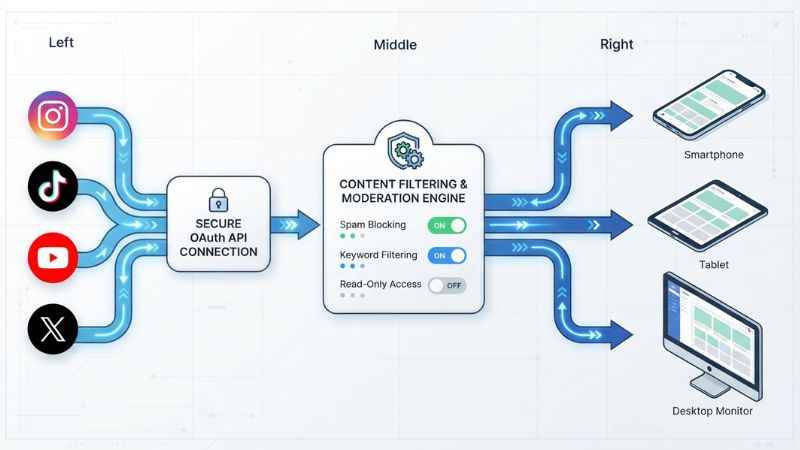
Third-Party Aggregators and Widgets
Tools like Taggbox, Juicer, and EmbedSocial can auto-collect posts from your social media accounts when connected.
- How it works: You connect your social profiles to the service. The service collects your latest posts and creates a single feed for your website.
- Best for: Displaying live streams, customer reviews, or dynamic photo grids.
- Pros: Updates on its own and lets you hide unwanted comments.
- Cons: Requires a paid monthly subscription for full features and can slow down your site if misconfigured.
How to Embed a Social Media Post on Your Site
Follow these five simple steps to place any public social post onto your web page:
- Find a Public Post: Go to Instagram, TikTok, YouTube, or X. Open the public post or video you want to share on your site.
- Copy the Embed Code: Click the “Share” button on the post and choose “Embed.” Copy the code provided in the pop-up box.
- Paste into Your Editor: Open your site builder (like WordPress, Wix, or Shopify). Add a “Custom HTML” or “Embed” block to your page and paste the code.
- Test the Mobile Layout: Save your draft and check the page on a smartphone. Make sure the embedded box adjusts properly to fit smaller screens.
- Monitor for Broken Links: Check the page every few months to make sure the original creator has not deleted the post or changed their privacy settings.
EmbedTree-Style Hubs vs Link-in-Bio vs Native Embeds
Choosing the right approach depends on what you want your visitors to do when they land on your page.
| Feature | EmbedTree-Style Content Hub | Link-in-Bio Page (Linktree/Beacons) | Native Embeds |
| Main Purpose | Displays playable videos and live social feeds directly on your site. | Lists clickable links that point users away to other platforms. | Shows a single chosen video or social post inside a blog post. |
| Automatic Updates? | Yes (when connected to account APIs). | No (you must update links manually). | No (static post code). |
| Media Playback | Users watch or read posts right on your web page. | Users must click a link and leave your site to view media. | Users watch or read content inside the embedded box. |
| Impact on Load Speed | Moderate to High (requires careful optimization). | Very Low (simple text buttons and small images). | Low (for single posts). |
| Privacy & GDPR | Needs a consent banner for tracking cookies. | Requires minimal tracking consent. | Depends on platform privacy settings. |
Step-by-Step: Build a Centralized Social Content Hub
If you want to build a centralized social media page on your site, follow these practical steps to set it up correctly.
Step 1: Plan Your Hub Layout
- Define goals and pick your top 3 platforms.
Step 2: Connect Accounts Securely
- Use OAuth and read-only access.
Step 3: Choose Layout
- Pick grid, carousel, or masonry photo feeds.
Step 4: Set Up Moderation
- Moderate posts and block unwanted comments.
Step 5: Publish & Test Performance
- Test page load speed and mobile responsiveness.
1. Plan Your Hub Layout
Decide on your main goal before choosing any tools. Are you trying to sell products, show customer reviews, or display your creative portfolio? Pick your top three social platforms to feature. Adding too many channels creates a cluttered screen and slows down performance.
2. Connect Your Accounts Securely
When using an aggregator tool, connect your profiles using OAuth logins. This gives the widget tool permission to read your public posts without ever giving away your account passwords. Always choose read-only access permissions.
3. Pick a Mobile-First Design
Choose a visual layout that adapts well to small phone screens:
- Grid: Great for Instagram photo feeds and product shots.
- Carousel: Best for saving vertical space on homepages.
- Masonry: Ideal for mixing media sizes like YouTube Shorts and long tweets.
4. Set Up Content Moderation
Never let an unmonitored hashtag feed post straight to your website. Use filtering options to block spam, bad language, or off-topic posts before they show up on your live site.
5. Publish and Test Load Speeds
Publish your hub page, then run it through a free performance tool like Google PageSpeed Insights. Make sure your images load quickly and do not push other page elements around while loading.
Performance, Privacy, and Compliance
Adding third-party scripts to your site introduces real performance and legal risks. Managing these areas keeps your visitors safe and your site running smoothly.
Speed and Core Web Vitals

Social media embeds pull heavy scripts from external servers. If you add five unoptimized embeds to a page, your site speed drops instantly.
To protect your site performance:
- Enable Lazy Loading: This setting tells your website to delay loading social widgets until a visitor scrolls down to them.
- Set Image Placeholders: Use a static preview image with a play button instead of loading an active video player right away.
- Cap Your Feed Size: Limit your live social widgets to display no more than six to eight items at a time.
Privacy Regulations (GDPR and CCPA)
Many social widgets set third-party cookies on your visitors’ web browsers. Under privacy laws like GDPR and CCPA, user consent is required before such scripts are allowed to run.
Always run a clear cookie consent banner on your site. Make sure your consent tool blocks social media scripts until the user clicks “Accept.”
System Reliability and Broken Links
Social feeds can fail when creators delete posts, change account handles, or when social networks alter their system rules.
| Risk | Cause | How to Fix It |
| Heavy Scripts | Loading multiple platform scripts at once. | Turn on lazy loading and limit feeds to six items. |
| Tracking Violations | Widgets placing cookies before user consent. | Block widget scripts until users accept your cookie banner. |
| Broken Embed Boxes | Post deleted, account made private, or embed breaks. | Audit embedded links quarterly and replace broken embeds with static fallback text/images. |
| API Disconnections | Social platform updates its security tokens. | Re-authenticate connections inside your widget dashboard periodically (for example, every few months). |
SEO Reality Check: What Embeds Can and Can’t Do
There are many myths online about how social media embeds impact Google rankings. Let’s separate reality from marketing fluff.
                 ┌──────────────────────────────────────────┐
                 │        DO SOCIAL EMBEDS HELP SEO?        │
                 └────────────────────┬─────────────────────┘
                                      │
            ┌─────────────────────────┴─────────────────────────┐
            ▼                                                   ▼
┌───────────────────────┐                           ┌───────────────────────┐
│     INDIRECT BOOST    │                           │   NO DIRECT RANKING   │
├───────────────────────┤                           ├───────────────────────┤
│ • Increases dwell     │                           │ • Google does not     │
│   time on page.       │                           │   rank pages higher   │
│ • Shows page is       │                           │   just for having     │
│   freshly updated.    │                           │   a social widget.    │
│ • Builds visitor      │                           │ • Unoptimized widgets │
│   trust and proof.    │                           │   hurt speed scores.  │
└───────────────────────┘                           └───────────────────────┘
Indirect SEO Benefits
- Better Dwell Time: When visitors stop to watch a video or read a social post on your page, they stay on your site longer. Search engines view longer visit times as a sign of helpful content.
- Content Freshness: Live social widgets show search engine crawlers that your page content updates regularly.
- Social Proof: Showing real customer reviews and user posts helps turn casual site visitors into paying customers.
What Embeds Will Not Do
Placing a social feed widget on a blank webpage will not send it to the top of search rankings. Google indexes written text, page context, and original content.
If your social feed slows down your page loading times, it can hurt your Core Web Vitals performance scores and damage your overall rankings. Use embedded social media to support your written content, not to replace it.
Common Mistakes (and How to Fix Them)
Avoid these four common mistakes when embedding social media feeds on your site:
- Overloading a Single Page: Adding multiple live social widgets to one page causes heavy lag. Fix: Keep live feeds on a dedicated “Community” or “Social” page, and use simple static images elsewhere.
- Forgetting Mobile Users: A layout that looks broad and clean on a desktop screen can break on a phone. Fix: Test every new widget layout on mobile devices using different screen sizes.
- Leaving Feeds Unmoderated: Allowing raw, unmoderated hashtag feeds on your site risks showing competitor ads or spam. Fix: Turn on manual post approval inside your widget settings.
- Setting and Forgetting: Platforms update their system rules often, which can disconnect your feed without warning. Fix: Schedule a quarterly check on your website to catch broken links and expired connections early. Audit embedded links quarterly and replace broken embeds with static fallback text/images.
Tool Shortlist: Choosing the Right Setup
Different site owners need different tools to manage their embedded content.
| Target Audience / Use Case | Recommended Tools & Solutions |
| Creators | Native Embeds, Link-in-Bio tools |
| Ecommerce | Taggbox, EmbedSocial |
| Blogs & Websites | CMS Blocks, Juicer |
- Best for Creators: Native oEmbed codes or simple link-in-bio tools (like Linktree or Beacons). They are low-cost, quick to maintain, and keep the focus on your primary video content.
- Best for Ecommerce: Social aggregators like Taggbox or EmbedSocial. They help collect shopper reviews, tag products in photos, and show Google Reviews right at checkout.
- Best for Bloggers and Publishers: Built-in CMS blocks (WordPress or Wix) paired with lightweight tools like Juicer. They allow you to add relevant media into articles without slowing down page load times.
| Tool Name | Best Use Case | Speed Impact | Moderation Options | Free Plan Available? |
| Native Embeds | Individual videos or posts | Low | None (shows original post) | Yes (100% free) |
| Juicer | Simple blog feeds | Low to Medium | Basic word filters | Yes (limited features) |
| Taggbox | Ecommerce social proof | Medium | Advanced filtering & tagging | Free plan/trial varies by tool — check vendor site |
| EmbedSocial | Reviews & photo galleries | Medium | Full moderation controls | Free plan/trial varies by tool — check vendor site |
| Linktree | Simple bio link pages | Very Low | N/A (link list only) | Yes (robust free plan) |
FAQ: Social Media Embedding & EmbedTree
What is social media stuff embedtree?
The phrase refers either to the “Social Media Stuff” category on the EmbedTree.com blog or to the general practice of building a “tree” of embedded social feeds on your own website.
Is EmbedTree a software tool or a content category?
EmbedTree.com is a content blog site, and “Social Media Stuff” is a category on their site. However, some articles and guides use “embedtree” as a loose term for organizing embedded social media feeds into a single page hub.
How do I embed Instagram, TikTok, or YouTube on my website?
Click the “Share” button on any public video or post, select “Embed,” and copy the provided code snippet. Then, paste that code into a Custom HTML block inside your site editor.
Does embedding social media help my website SEO?
Not directly. Embeds do not boost search rankings on their own. However, video embeds and social proof keep visitors on your page longer, which sends positive user engagement signals to search engine algorithms.
Will social embeds slow down my website performance?
Yes, if you add too many at once. External social scripts increase page loading times. Use lazy loading, limit feed display sizes, and compress image files to protect your Core Web Vitals speed scores.
Can I embed private social media accounts or hidden posts?
No. Embed codes only work for public social media accounts and public posts. If an account is set to private, its content cannot be shared or displayed on an external site.
What is the difference between EmbedTree-style hubs and Linktree?
Linktree lists simple clickable links that send visitors away to other apps. An embedded social hub lets visitors play videos, view photo galleries, and read live social feeds without ever leaving your website page.
Are social media feed widgets GDPR compliant?
Widgets are only GDPR compliant if you handle their scripts properly. Many social media widgets set third-party cookies, so under GDPR and CCPA, you must secure user permission through a cookie consent banner before firing those scripts.
How often do embedded social feeds update automatically?
Automatic updates depend on your widget plan. Free plans often update less often (hours), while paid plans can update more frequently (minutes to hours), depending on the specific tool.
What happens if an embedded post gets deleted?
If an author deletes a post or sets their profile to private, the embed may break, show an error message, or display nothing at all on your page. You will need to remove the broken embed code manually.
You May Also Like:
TheStripesBlog Frank Fisher: Who He Is and How to Verify Contact Information
Adrian CryptoProNetwork Explained: What It Is, Features, and Safety Guide

Joseph Quinn is the founder and editor of Punspa, a technology-focused website covering technology, website reviews, internet terms, and other things worth figuring out online. He writes and edits the site’s technology and web content, with a focus on clear, useful explanations. He also enjoys humor and wordplay, which occasionally leads him to write a pun-related article just for the fun of it.