Have you ever had a single music loop play in your head on repeat for hours? That experience is called LSS, or Last Song Syndrome. While the phrase sounds like an official medical condition, it is actually a popular slang term for a song that gets stuck in your head.
Knowing the lss meaning in song contexts helps you understand why music clings to your memory. It also helps you avoid mixing it up with texting slang like “Long Story Short.”
What Does LSS Mean in a Song? (Quick Answer)
In music, LSS stands for Last Song Syndrome. It describes the moment a catchy song, chorus, or melody gets stuck on a loop inside your head. The term is closely tied to the psychological concept of an “earworm.” It is widely used in Filipino music and social-media contexts, and it is now common across social media platforms like TikTok and Instagram.
Quick Context Check: If you see “LSS” in a music caption or video comment, it means “Last Song Syndrome.” In general texting and chat, LSS most commonly means “Long Story Short.”
Where Did “Last Song Syndrome” Come From?
The initialism dates back to the 2000s and became widely documented across Filipino media and online communities. Music fans in the Philippines frequently use the acronym to explain the feeling of singing the same chorus all day after hearing a track on the radio or at a karaoke gathering.
While the exact person who coined the phrase is not definitively documented in publicly available sources, the term became a standard piece of music vocabulary in the region.
The phrase became deeply rooted in pop culture with the release of the 2019 Filipino musical film LSS. The movie starred Gabbi Garcia and Khalil Ramos as the lead characters, while the real-life folk-pop band Ben&Ben appeared in supporting roles with their music central to the storyline about two dreamers who follow the band.
The film’s success brought the phrase into mainstream pop culture and turned it into an everyday term for music fans.
Is LSS the Same as an Earworm?
Yes, LSS and earworms are two different names for the same psychological experience. Scientists refer to this event as Involuntary Musical Imagery (INMI).
An earworm happens when a segment of music plays automatically in your mind without your conscious effort. This usually involves a short, repetitive section of a song rather than the entire track.
[ Catchy Musical Hook ] ➔ [ Brain Memory Loop ] ➔ [ Involuntary Replay (LSS) ]
Why Songs Get Stuck in Your Head
Research shows that certain music traits trigger LSS more easily than others:
- Repetitive Melodies: Songs with simple, repeating rhythm patterns are easy for your brain to store.
- Familiarity and Recency: Tracks you have heard frequently or recently are much more likely to play on a loop.
- Emotional Spark: Music tied to a strong mood or recent memory stays active longer in your thoughts.
- Unfinished Loops: Earworm research often cites the Zeigarnik effect: if you hear only part of a chorus, your brain attempts to fill in the missing notes by looping the section you remember.
How People Use LSS Online (TikTok, Instagram, Captions)
On platforms like TikTok, Instagram, and Facebook, music listeners use LSS to highlight tracks they cannot stop playing. Video creators often structure their short-form videos around catchy musical hooks to intentionally trigger LSS in their viewers.
Here is how you will typically see the term used in online spaces:
- Video Captions: “Listening to this track once was a mistake. Absolute LSS!”
- Comment Sections: “This chorus gave me severe LSS since this morning.”
- Music Reviews: “The bridge on this song has a massive LSS factor.”
How to Spot LSS Usage in the Wild
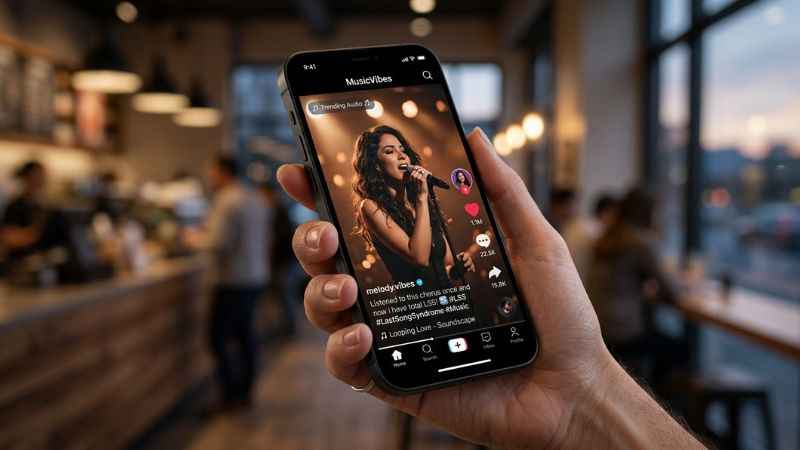
Look for these context cues in social media posts to confirm the user is talking about Last Song Syndrome:
- The post includes a music sticker, audio track link, or song title.
- Words like loop, stuck, chorus, or replay appear near the acronym.
- The content features a artist performance, karaoke clip, or dance challenge.
How to Stop LSS When It Is Annoying
Having a song play repeatedly in your head can be distracting when you need to focus on work or study. Researchers at Western Washington University found that you can disrupt earworms by engaging your brain in tasks that require cognitive effort, specifically verbal tasks like five-letter anagrams or puzzles.
The 5-Step Loop-Breaker Protocol
- Acknowledge the Loop: Recognize that your brain is playing a song fragment on repeat.
- Engage in a Mental Task: Solve a verbal puzzle like a five-letter anagram, work on a crossword, or read a book out loud to occupy the working memory your brain uses to play music.
- Listen to the Full Track (Anecdotal Tip): Play the song that is stuck in your head from start to finish. Many listeners report that hearing the final note gives the brain a sense of completion.
- Use a “Cure Song”: Listen to an entirely different, complex song with a distinct rhythm to clear your mental slate.
- Change Your Physical Activity: Stand up, go for a walk, or do light exercise to break your current focus pattern.
Do’s and Don’ts for Managing Earworms
| What to Do | What to Avoid |
| Do complete a challenging word puzzle or five-letter anagram (backed by cognitive research). | Don’t do passive activities like staring at a blank wall. |
| Do try listening to the entire song to give your brain closure (a common anecdotal strategy). | Don’t repeat just the catchy chorus over and over. |
| Do play a different, non-repetitive instrument track. | Don’t fight the music forcefully, which increases stress. |
LSS vs. Other Meanings: Long Story Short and More
Because LSS is a short acronym, it has different meanings depending on where you read it. In general texting and chat messages, the primary and most common meaning is “Long Story Short.”
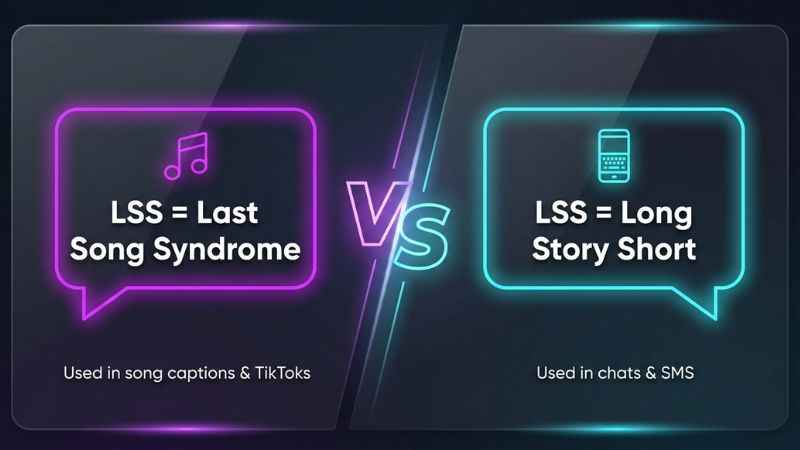
Meaning Comparison Guide
| Acronym Meaning | Primary Context | Example Usage |
| Last Song Syndrome | Music posts, video captions, entertainment comments | “This new single gives me major LSS.” |
| Long Story Short | Text messaging, chat summaries, emails | “LSS, we missed the bus and walked home.” |
| Lead Singer Syndrome (Informal Industry Slang) | Music industry discussions, band interviews | “The group split up because of his lead singer syndrome.” |
Note on Similar Slang: Do not confuse LSS with LLS (“Laughing Like Shit”). LLS is used in texting to show that something is funny, similar to LOL or LMAO. Also, note that while “Lead Singer Syndrome” shares the same initials, it is informal industry slang for frontperson behavior and is entirely separate from “Last Song Syndrome” in music captions.
Songwriting Angle: What Gives a Chorus an “LSS Factor”?
Songwriters and producers often design tracks with specific musical traits intended to trigger Last Song Syndrome. A song built for high replay value usually contains four key elements:
- Melodic Contrast: A chorus that sounds distinctly different in pitch or rhythm from the verses around it.
- Singable Intervals: Melodies built with small steps between notes, making them easy for everyday listeners to hum.
- Hook Density: Short, memorable lyrical phrases repeated multiple times within a 30-second window.
- Rhythmic Predictability: A steady beat that syncs naturally with regular physical movements like walking or clapping.
Examples of LSS in the Wild
Here are realistic examples of how listeners use LSS across different platforms:
- Instagram Story: “On my third cup of coffee and this chorus is still my LSS today.”
- TikTok Comment: “Warning: watching this dance clip twice will give you instant LSS.”
- Spotify Playlist Title: “My Current LSS – Tracks on Repeat”
- X (Twitter) Post: “Does anyone else have LSS from that commercial jingle?”
FAQs About LSS in Music
What does LSS stand for in music?
In music contexts, LSS stands for Last Song Syndrome. It describes a song or chorus that repeats continuously in your mind after you hear it.
Is LSS the same as an earworm?
Yes. LSS is a casual, social slang term for an earworm. Both refer to the psychological phenomenon of Involuntary Musical Imagery (INMI).
Why do I keep hearing a song in my head?
Your brain’s working memory naturally repeats catchy, familiar, or incomplete musical patterns (often associated with the Zeigarnik effect). This process is triggered easily by recent listening or strong emotional connections to a song.
How can I get rid of LSS quickly?
You can disrupt LSS by solving an engaging cognitive or verbal puzzle (like a five-letter anagram), trying the common tip of playing the song completely through, or switching to a different track.
What does LSS mean in chat or text messages?
In general text messages and chat apps, LSS most commonly stands for “Long Story Short.” It signals that the sender is summarizing a longer story.
Can LSS mean “Long Story Short” in music posts?
Rarely. If a post includes music tags, audio links, or references to singing and dancing, LSS almost always means Last Song Syndrome.
What is Lead Singer Syndrome?
Lead Singer Syndrome is an informal music-industry term describing an exaggerated ego or dominant behavior displayed by a band’s vocalist. It shares the same initials as LSS, but it is a completely separate concept and not an alternate meaning for Last Song Syndrome in song captions.
How is LSS used on TikTok and Instagram?
Creators use LSS in video captions and comments to highlight trending audio clips, viral dance songs, or catchy hooks that viewers are likely to remember.
Next Steps to Clear Your Head
If a song is stuck in your head right now, do not try to ignore it. You can try playing the track completely from start to finish, and then switch over to a quick 5-minute verbal exercise or word puzzle like an anagram to break the mental loop for good.
You May Also Like:
What Does SMB Mean in Text? Meanings, Context Clues, and Safe Replies
What Is Pulsamento? A Clear Guide to Meaning, Music, and Misuse

Joseph Quinn is the founder and editor of Punspa, a technology-focused website covering technology, website reviews, internet terms, and other things worth figuring out online. He writes and edits the site’s technology and web content, with a focus on clear, useful explanations. He also enjoys humor and wordplay, which occasionally leads him to write a pun-related article just for the fun of it.