If someone sends you a text that just says “Bet,” they are not asking to make a wager. In modern informal communication, bet slang is a simple way of saying “okay,” “agreed,” or “for sure.” It is an affirmative response used to confirm plans, accept challenges, or show that you understand what someone just said.
While the word is everywhere on social media platforms like TikTok, Snapchat, and Instagram, its usage changes based on tone. Depending on how you say it, “bet” can mean enthusiastic agreement, a competitive challenge, or even sarcastic disbelief.
What Does “Bet” Mean in Slang? (The 3 Main Uses)
Quick Definition: In slang, “bet” is an interjection used to confirm a statement, accept a challenge, or express sarcastic agreement. It acts as a quick substitute for “sounds good” or “you got it.”
The word “bet” changes its meaning depending on the context of the conversation and the speaker’s tone of voice.
1. Agreement or Affirmation (“Okay,” “For Sure”)
This is the most common way people use the term. It shows that you agree with a plan or confirm a statement.
- Friend 1: “We are meeting at the park at 5 PM.”
- Friend 2: “Bet.”
In this scenario, Friend 2 is simply saying “okay” or “sounds good.”
2. Accepting a Challenge (“Try Me,” “Watch Me”)
When someone doubts your abilities or proposes a competitive challenge, saying “bet” means you accept. It shows confidence.
- Friend 1: “There is no way you can finish that massive burger.”
- Friend 2: “Bet.”
Here, Friend 2 means “watch me do it” or “challenge accepted.”
3. Sarcastic Disbelief (“Yeah, Right”)
If you use a flat tone, “bet” turns into a sarcastic response. It shows that you do not believe what the other person is saying.
- Friend 1: “I am going to wake up at 4 AM every day this week to workout.”
- Friend 2: “Bet.”
In this case, Friend 2 is saying “yeah, right, I will believe it when I see it.”
Comparing the 3 Meanings of “Bet”
| Usage Type | What It Means | Tone of Voice | Simple Example |
| Agreement | “Okay,” “Sounds good,” “For sure” | Friendly, upbeat, direct | “Pick me up at 6?” → “Bet.” |
| Challenge | “Watch me,” “Challenge accepted” | Confident, competitive | “You can’t win this match.” → “Bet.” |
| Sarcasm | “Yeah right,” “I don’t believe you” | Flat, dry, drawn-out | “I’m never eating candy again.” → “Bet.” |
How to Use “Bet” in Texting and Conversation
Using slang correctly helps you communicate naturally without sounding out of place.
When It Is Appropriate to Say “Bet”
“Bet” works best in casual, low-stakes environments. You can comfortably use it when:
- Texting friends or family members who understand casual terms.
- Chatting on social media apps like Discord, Snapchat, or Instagram.
- Talking in person with peers, classmates, or close colleagues.
When NOT to use it: Avoid using “bet” in professional emails, job interviews, academic papers, or when speaking to figures of authority. Saying “bet” to a supervisor or teacher can come across as overly casual or dismissive.
“Bet” in Text Messages: Real Examples
Punctuation changes the tone of “bet” in text messages:
- “Bet.” (With a period): Direct agreement. Signals that the conversation is finished.
- “Bet!” (With an exclamation point): Enthusiastic agreement. Shows excitement about the plan.
- “alr bet” (Short for “alright, bet”): Casual acknowledgement. Means “alright, sounds good.”
- “aight bet”: A variation of “alright, bet” that combines two casual affirmations.
Plaintext
Example 1: Confirming Plans
Person A: Can you grab some ice on your way over?
Person B: Bet.

Example 2: Group Text Confirmation
Person A: Movie starts at 8, don't be late!
Person B: Alr bet, see you guys there.
How to Respond When Someone Says “Bet”
Your response depends entirely on how the other person used the word:
- If used for agreement: You do not need to reply. If you want to respond, a simple “See you then” or a thumbs-up emoji works well.
- If used for a challenge: Follow through on whatever action you were discussing.
- If used sarcastically: Laugh it off, address their doubt, or move to a new topic.
Where Did “Bet” Slang Come From? (Origin & Etymology)
Understanding the roots of slang gives helpful context for how language evolves over time.
African American Vernacular English (AAVE) Origins
The modern slang term “bet” originated in African American Vernacular English (AAVE). Print records date the term back to at least 1979 in the film script for The Cruz Brothers and Miss Malloy.
By the 1980s, the word was a stable part of Black American speech in urban centers across the United States.
Connection to “You Bet” (1857 Phrase)
Long before “bet” became a standalone interjection, Americans used the phrase “you bet” or “you can bet on it.”
Dating back to 1857, “you bet” meant “certainly” or “without a doubt.” Over time, speakers in Black communities shortened this longer phrase down to the single word “bet,” turning a phrase into a quick, punchy interjection.
1857: "You bet" (Meaning: Certainly)
  │
  ▼
1980s: AAVE adopts single-word "Bet" in casual speech
  │
  ▼
1990s: Hip-hop culture spreads "Bet" nationwide
  │
  ▼
2010s: Social media brings "Bet" to global youth culture
  │
  ▼
2026: Universal recognition in everyday casual English
How “Bet” Spread to Mainstream Use
During the 1990s, the term spread beyond Black communities into broader youth culture through hip-hop music, television shows, and college campuses.
With the rise of social media platforms like TikTok, Instagram, and Snapchat in the late 2010s, “bet” became a core part of Gen Z vocabulary. Today, dictionaries like Merriam-Webster list the term alongside other standard informal speech.
Is “Bet” Still Used in 2026?
Yes, “bet” is still widely used. While some slang terms fade quickly, “bet” has proven to have staying power.
By 2026, the term is no longer considered cutting-edge slang, but it remains a permanent fixture in everyday casual conversation. Gen Z continues to use it heavily in daily text exchanges, while some younger users (Gen Alpha) use it alongside newer terms like “no cap” or “rizz.”
The word has achieved broad cultural recognition. It regularly appears in digital media, TV scripts, and national word puzzles like the September 9, 2026 New York Times Crossword (clued as “‘OK,’ in modern slang”), proving that it has transitioned from modern slang into common informal English.
“Bet” vs. Similar Slang: Aight, Say Less, No Cap
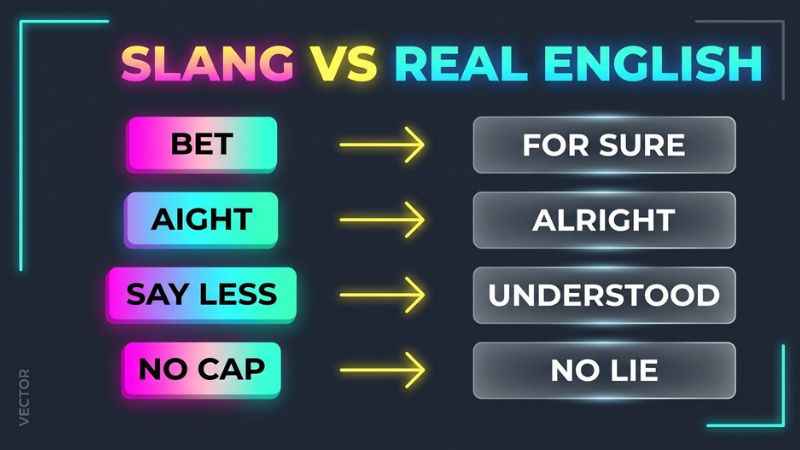
It is easy to mix up modern affirmation terms. Here is how “bet” compares to similar slang words:
| Slang Term | Core Meaning | Tone | Best Situation to Use It |
| Bet | Okay, agreed, for sure | Confident, direct | Confirming plans or accepting a challenge. |
| Aight | Alright, okay | Relaxed, neutral | Giving a basic, casual agreement. |
| Say Less | I understand completely | Enthusiastic, cooperative | When you agree immediately without needing details. |
| No Cap | No lie, for real | Emphatic, sincere | Emphasizing that you are telling the truth. |
| Fr Fr | For real, for real | Serious, supportive | Showing strong agreement with someone’s point. |
Knowing Which Term to Pick
- Use “bet” when someone offers a plan: “I’ll order pizza.” → “Bet.”
- Use “say less” when you want to show immediate action: “Can you help me move this table?” → “Say less.”
- Use “aight” for a low-energy response: “I’m heading out now.” → “Aight.”
Cultural Context: AAVE, Appropriation, and Respectful Use
Because “bet” came from Black culture, understanding its background helps you use it respectfully.
Acknowledging AAVE Origins
African American Vernacular English (AAVE) has shaped modern popular culture, hip-hop, and internet speech. Many everyday informal words originally developed inside Black communities before spreading to the wider public.
Recognizing that “bet” comes from AAVE ensures that the contributions of Black language creators are acknowledged rather than forgotten.
Using Slang Respectfully
Language naturally spreads across cultural lines as people interact online and in person. Using “bet” in normal conversation is common for people of all backgrounds today.
However, using slang respectfully means keeping a few guidelines in mind:
- Avoid forced usage: Do not force slang words into sentences just to sound trendy. It can sound unnatural.
- Do not mock originators: Avoid using AAVE terms in an exaggerated way to poke fun at the speech patterns of Black speakers.
- Consider code-switching: Be aware of your surroundings. Natural communication means adapting your language to fit the social setting.
Common Mistakes People Make With “Bet”
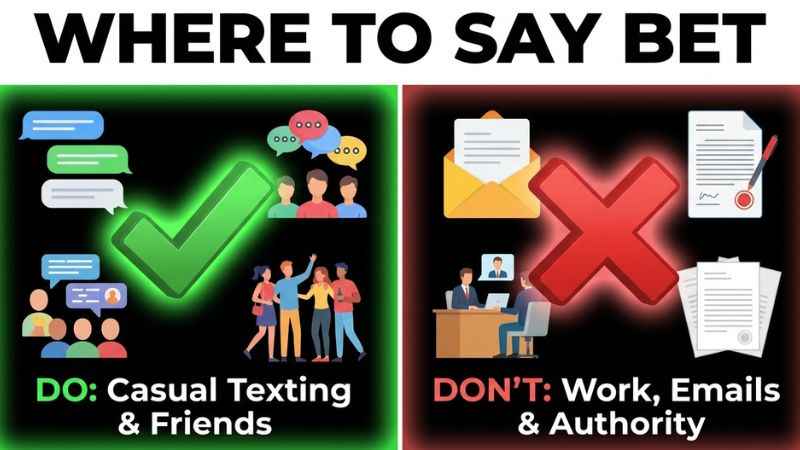
To avoid awkward misunderstandings, avoid these common mistakes when using the word:
- Using it in formal settings: Sending “bet” to a hiring manager or an academic professor looks unprofessional. Stick to standard phrasing like “Understood” or “Sounds good.”
- Misreading the speaker’s tone: Pay close attention to how someone says “bet.” A flat, drawn-out delivery means skepticism, while a quick, high-energy delivery means true agreement.
- Overusing the word: Relying on “bet” as your answer to every single sentence makes speech feel repetitive.
- Assuming everyone understands it: Older adults or non-native English speakers might interpret “bet” literally as a financial wager.
“Bet” Around the World: International Usage
While “bet” is primarily an American slang term, its reach extends internationally due to global social media platforms.
- United States: Common among teens and young adults across the US.
- Canada: Widespread adoption due to shared media and cultural exchange with the US.
- United Kingdom and Australia: Used mainly by younger generations who consume American music, YouTube content, and TikToks.
- Non-English Speaking Countries: Understood primarily by young people who use global social media apps, though it rarely translates directly into other languages.
FAQ: Your “Bet” Slang Questions Answered
Why does Gen Z say “bet”?
Gen Z uses “bet” because it is a fast, efficient way to show agreement or accept plans. It spread widely through TikTok, social media messaging, and hip-hop culture.
What does “bet” mean in texting?
In text messages, “bet” almost always means “okay,” “sounds good,” or “deal.” It shows that you confirm whatever plan or statement was just texted to you.
Is “bet” an AAVE term?
Yes. “Bet” originated in African American Vernacular English (AAVE) in the late 1970s and 1980s before becoming mainstream American slang.
Is “bet” still cool to say in 2026?
Yes, “bet” is still very common in 2026. While it is no longer brand-new slang, it has become a standard informal response for Gen Z and younger Millennials.
What does “you bet” mean compared to “bet”?
“You bet” is a traditional American phrase that means “you’re welcome” or “certainly.” “Bet” is the modern slang variant used to mean “okay” or “agreed.”
What is a good synonym for “bet”?
Good everyday synonyms include “alright,” “deal,” “sounds good,” “for sure,” and “got it.” Slang synonyms include “aight” and “say less.”
How do you pronounce “bet” slang?
It is pronounced exactly like the standard English word “bet” (rhyming with “get” or “set”). The International Phonetic Alphabet (IPA) spelling is /bɛt/.
What does “alr bet” mean in a text?
“Alr bet” is short for “alright, bet.” It means “alright, sounds good” or “alright, deal.”
Key Takeaways
- Core Meaning: “Bet” is slang for “okay,” “agreed,” or “for sure.”
- Three Main Contexts: It can show agreement, accept a challenge, or express sarcastic disbelief depending on tone.
- Origins: The term developed in African American Vernacular English (AAVE) in the late 1970s and 1980s.
- Modern Status: It remains widely used in 2026 across social media, texting, and casual speech.
- Best Practice: Use it casually with peers, but keep it out of formal or professional settings.
If you are unsure whether to use “bet” in a conversation, pay attention to how those around you speak. When in doubt, stick to classic alternatives like “sounds good” or “see you then.”
You May Also Like:
NSFW Meaning in Slang: What It Stands For and How to Use It
Git (Slang): Meaning, Severity, Origin, Examples, and the Git (Software) Story

Joseph Quinn is the founder and editor of Punspa, a technology-focused website covering technology, website reviews, internet terms, and other things worth figuring out online. He writes and edits the site’s technology and web content, with a focus on clear, useful explanations. He also enjoys humor and wordplay, which occasionally leads him to write a pun-related article just for the fun of it.