The word airband has three completely different meanings depending on what you are searching for. First, it refers to the radio frequencies (108 to 136.975 MHz) used by pilots and air traffic controllers to navigate and talk safely. Second, it is the name of a UK internet provider that supplies broadband to rural homes. Third, it describes Microsoft’s initiative to bring internet access to underserved communities worldwide.
| Frequency Range | Primary Allocation | Modulation | Operational Function |
| 108.000 – 117.950 MHz | Navigation (NAV) | AM | Transmits signals for VOR (VHF Omnidirectional Range) waypoints and ILS (Instrument Landing System) runway localizers. |
| 118.000 – 136.975 MHz | Voice Communications (COM) | AM | Dedicated to pilot-to-controller and pilot-to-pilot voice communications across control towers, approach centers, and en-route centers. |
| 121.500 MHz | International Emergency | AM | Guard frequency monitored continuously for aviation distress calls and search-and-rescue operations. |
- If you want to listen to pilots or learn radio tech: Read the Aviation section below.
- If you are checking internet speeds or coverage in the UK: Jump straight to the Broadband section.
- If you are researching Microsoft’s global tech project: Scroll to the Microsoft Initiative section.
Airband in Aviation: The Aircraft Radio Spectrum
Direct Answer: In aviation, the airband is a specific range of Very High Frequency (VHF) radio signals between 108 MHz and 136.975 MHz. Pilots and air traffic controllers use these frequencies exclusively for navigation and voice communication. It relies on Amplitude Modulation (AM) to keep emergency transmissions clear.
   108.0 MHz          118.0 MHz                    136.975 MHz
---|----------------------|--------------------------------|--->
   |     NAVIGATION       |       VOICE COMMUNICATIONS     |
   | (ILS / VOR Beacons)  |  (Air Traffic Control / Pilot) |
The aviation radio spectrum sits just above standard FM commercial radio stations (88 to 108 MHz). Regulators like the Federal Aviation Administration (FAA) and the International Civil Aviation Organization (ICAO) reserve these airwaves strictly for flight safety.
The Two Core Frequency Zones
The radio spectrum splits into two clear operational sections:
- 108.000 MHz to 117.950 MHz (Navigation): Planes use this lower zone for automated flight guidance. Instrument Landing Systems (ILS) use odd-decimal signals to guide planes safely onto runways. VHF Omnidirectional Range (VOR) beacons use even-decimal signals to help pilots track their exact position across the country.
- 118.000 MHz to 136.975 MHz (Voice Communication): This upper zone carries all spoken messages. It handles chatter between control towers, radar centers, and aircraft. It also includes 121.5 MHz, which is the international emergency frequency monitored by overflying aircraft and select ground stations.
Why Aviation Uses AM Instead of FM
Commercial radio stations use Frequency Modulation (FM) because it sounds clear and resists background noise. However, aviation strictly uses Amplitude Modulation (AM) for a critical safety reason called the capture effect.
| Feature | FM Radio (Frequency Modulation) | AM Radio (Amplitude Modulation) |
| Behavior with Overlapping Signals | Capture Effect Active: The receiver locks entirely onto the stronger signal. | Linear Mixing: Both transmissions combine directly on the frequency wave. |
| Weaker Signal Outcome | Suppressed / Blocked: The weaker signal is completely silenced. | Audible Squeal / Hiss: Heard as background noise or a heterodyne squeal under the main signal. |
| Pilot Awareness | Low: The pilot hears clear audio and has no indication another plane is trying to speak. | High: The audio degradation immediately alerts both pilots and ATC to an overlapping transmission. |
| Primary Advantage | High audio fidelity and complete noise suppression for commercial music. | Critical safety redundancy that prevents silenced emergency transmissions. |
With FM radio, if two transmitters broadcast at the same time on the same channel, the radio receiver locks onto the stronger signal and completely blocks out the weaker one. In aviation, that could mean a quiet distress call from a distant plane gets silenced by a loud call from a nearby jet.
With AM radio, two overlapping signals produce a loud squeal or squeak. The audio quality drops, but the pilot instantly knows that two people spoke at once. That warning prompts the controller to ask both pilots to repeat their messages, preventing dangerous miscommunications.
Channel Spacing: 25 kHz vs. 8.33 kHz
Air traffic grows every year, creating crowded airwaves. To make room for more channels, aviation authorities changed how they split up the frequency spectrum.
- Legacy Spacing (25 kHz): Older radios split each Megahertz into 40 separate channels.
- Modern Spacing (8.33 kHz): Modern systems split each Megahertz into 120 narrower channels.
This shift tripled the available channels across busy regions. European airspace mandates 8.33 kHz spacing for all flights, while other regions are adopting it gradually.
How to Listen to Airband (Legally)
Direct Answer: You can listen to live aviation radio using a specialized VHF receiver, a hardware radio scanner, a cheap Software Defined Radio (SDR) dongle plugged into a computer, or free streaming websites like LiveATC. Net transmission without an operator license is illegal.
+----------------------+--------------------+---------------------+--------------------+
| Gear Type            | Cost Range         | Ease of Use         | Best For           |
+----------------------+--------------------+---------------------+--------------------+
| Mobile Apps          | Free to $5         | Very Easy           | Casual Listening   |
| RTL-SDR USB Dongle   | $20 to $40         | Moderate (PC Setup) | Tech Hobbyists     |
| Handheld Scanner     | $100 to $200       | Easy                | Local Monitoring   |
| Airband Transceiver  | $250 to $600+      | Requires License    | Pilots & Ground    |
+----------------------+--------------------+---------------------+--------------------+
Hardware Scanners vs. SDR Dongles
Listening to local air traffic control is a popular hobby. Standard car or home FM radios cannot pick up these signals because they lack the correct frequency range and AM processing modes.
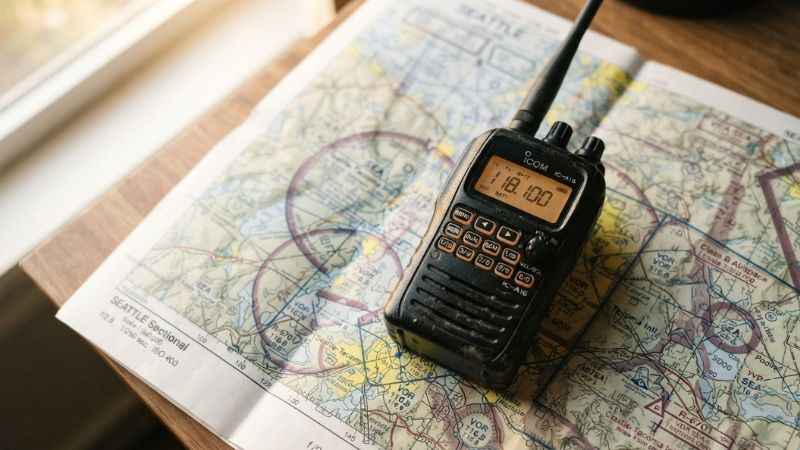
- Handheld Scanners: Dedicated portable receivers from brands like Uniden tune into aviation frequencies out of the box. Dedicated aviation radios from makers like Icom and Yaesu work even better, though models capable of transmitting require official pilot licenses.
- RTL-SDR USB Dongles: A Software Defined Radio (SDR) is a tiny USB stick that plugs into a PC or laptop. Paired with a basic external antenna and free software, an inexpensive SDR stick turns a computer into a wide-band radio receiver.
Live Streaming Apps
If you do not own radio hardware, online streaming platforms gather feeds from volunteers who host receivers near major airports. These feeds stream tower communications directly to your phone or browser with a short delay.
Rules and Regulations
In the United States, listening to unencrypted aviation broadcasts is fully legal under FCC guidelines. In the UK, picking up broadcasts not intended for general reception without authorization is strictly illegal under the Wireless Telegraphy Act 2006. Transmitting on any aviation frequency without a valid pilot certificate or ground station license carries heavy fines and criminal charges worldwide.
Airband Broadband: UK Rural Internet Provider Review
Direct Answer: Airband is an independent UK internet service provider (AltNet) specializing in connecting rural communities. It delivers speeds up to 900 Mbps using a hybrid network of underground Full Fibre (FTTP) lines and over-the-air Fixed Wireless Access.
TOWER (Fixed Wireless) -------------> RECEIVER ON ROOF -----> HOME ROUTER
                                                                   |
EXCHANGE (Full Fibre) --------------> UNDERGROUND CABLE -----> HOME ROUTER
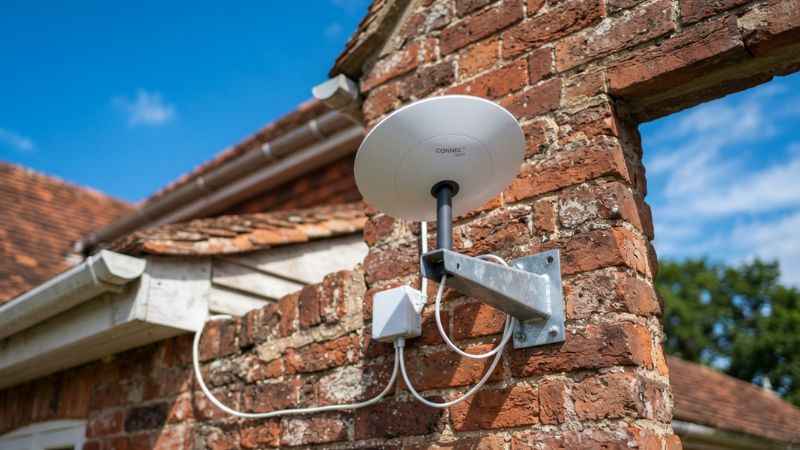
Unlike giant national providers that rely on legacy telephone networks, Airband builds its own independent infrastructure. It primarily serves rural homes and businesses across the West Midlands, South West, North West England, Wales, and parts of Scotland.
How Their Technology Works
Airband delivers high-speed connections using two main delivery methods:
- Full Fibre (FTTP): Fibre-optic cables run directly from the local exchange into the home. This connection delivers stable gigabit-class speeds that stay fast regardless of weather conditions.
- Fixed Wireless Access (FWA): In remote hilly areas where digging trenches for cable is too expensive, Airband uses directional radio transmitters. A transmitter tower sends a secure high-speed wireless signal to a small dish receiver mounted on your roof.
Airband UK Broadband: Pros vs. Cons
| Pros | Cons |
| High speeds up to 900 Mbps on Full Fibre (FTTP) connections. | Fixed wireless requires clear line-of-sight to local transmission towers. |
| Serves remote rural areas often neglected by mainstream providers like BT. | Weather conditions (heavy rain, dense fog) can occasionally impact wireless stability. |
| No active phone line required for service delivery. | Regional coverage only (focused on rural UK, not nationwide). |
| Mid-contract price hike protections built into plans. | Longer customer service wait times during peak outage periods. |
Speeds, Reliability, and Service Ratings
On full fibre connections, download speeds match major competitors at up to 900 Mbps. Wireless packages typically range from 40 Mbps to 100 Mbps depending on distance and terrain.
The provider maintains an average rating of approximately 4.3 out of 5 stars on Trustpilot. Customers frequently praise field engineers for extending internet to isolated properties. Negative reviews usually mention service delays on wireless connections caused by physical line-of-sight obstacles like overgrown trees or heavy fog.
To confirm availability, homeowners enter their postcode into the official coverage tool on the company’s website.
The Microsoft Airband Initiative
Direct Answer: The Microsoft Airband Initiative is a corporate partnership program designed to bring high-speed internet access to unserved rural areas globally. It relies heavily on TV White Space (TVWS) tech, using unused television broadcast channels to beam broadband signals across difficult terrain.
TV TOWER (Unused TV Signals / White Space) ======> LOW FREQUENCY BROADLINE ======> RURAL COMMUNITIES
                                                   (Passes through walls/hills)
Launched in 2017, the initiative set a key U.S. goal in 2018 to extend broadband coverage to 3 million unserved rural Americans. The project has since expanded internationally with a major goal of extending internet access to 250 million people globally by 2025, including 100 million people across Africa.
The Power of TV White Spaces
The core technological driver behind Microsoft’s program is TV White Space (TVWS).
When television stations broadcast programming, regulators leave empty radio channels between stations to prevent signal interference. These unused channels are called “white spaces.” They operate in the low 600 MHz frequency range.
Lower frequency signals travel significantly further than standard Wi-Fi and easily penetrate physical barriers like buildings, heavy foliage, and hills. By deploying specialized transmitters on these vacant TV channels, communities connect remote schools, clinics, and farms without spending millions on underground cables.
Airband Frequencies & Technical Specifications
Use this reference table to understand how the aviation frequency spectrum is split:
| Frequency Range | Primary Purpose | Modulation Mode | Key Notes |
| 108.000–111.950 MHz | ILS Localizers | AM | Shared with VORs. Even decimals indicate VOR; odd decimals indicate ILS runway guidance. |
| 112.000–117.950 MHz | VOR Navigation | AM | Used by aircraft navigation computers to calculate overland flight paths. |
| 118.000–136.975 MHz | Voice Communications | AM | Handles air traffic control, ground control, and pilot-to-pilot chat. Uses 8.33 kHz spacing in Europe. |
| 121.500 MHz | International Emergency | AM | Monitored by overflying aircraft and select ground stations. Satellite monitoring transitioned to 406 MHz. |
| 123.450 MHz | Informal Pilot Air-to-Air | AM | Unofficial communication channel used by pilots over oceanic or remote stretches. |
Common Misconceptions & Troubleshooting
“Why does my radio scanner sound like loud static?”
Your receiver is likely set to FM mode. Aviation voice signals use AM. When an FM receiver attempts to decode an AM broadcast, the audio produces harsh, unreadable static. Switch your receiver’s mode setting from FM to AM.
“Is Airband internet just standard 4G mobile broadband?”
No. Airband UK’s fixed wireless network uses high-capacity radio links operating on licensed and unlicensed directional frequencies. It communicates directly between a central mast and a stationary dish on your roof, offering lower latency and more reliable bandwidth than standard mobile phone towers.
“Can I use a ham radio to talk on airband frequencies?”
No. Transmitting on aviation frequencies using non-certified hardware or amateur radio gear is illegal. Aviation radios must pass strict manufacturing certifications to prevent rogue signals from interfering with flight safety channels.
Frequently Asked Questions
What is the difference between airband and aircraft band?
There is no technical difference. Both terms describe the same portion of the VHF radio spectrum (108 to 136.975 MHz) allocated for civil aviation navigation and voice communication.
Is it illegal to listen to airband radio frequencies?
In the US, listening is legal under FCC rules. In the UK, it is technically illegal under the Wireless Telegraphy Act 2006 to intercept radio transmissions without authorization, regardless of enforcement practices.
Does Airband broadband require a traditional phone line?
No. Both their Full Fibre and Fixed Wireless services run independently of legacy copper telephone networks, so you do not need an active phone line to receive service.
Why do aviation radios use AM instead of FM?
Aviation uses AM because it avoids the “capture effect.” When two AM signals overlap, they combine into an audible squeal rather than letting the stronger signal silence the weaker one, ensuring emergency transmissions are never hidden.
What is the best antenna for long-range airband reception?
A tuned outdoor dipole or ground-plane antenna mounted high above your roofline offers the best reception. Because VHF signals travel via line-of-sight, height above surrounding trees and buildings matters more than radio cost.
Recommended Next Steps
If you are an aviation enthusiast, buy an inexpensive RTL-SDR USB dongle and pair it with free software like SDR# to start listening to local air traffic control within minutes. If you are a UK homeowner struggling with slow rural internet speeds, visit the Airband UK website and run your postcode through their availability checker to see if fixed wireless or full fibre has reached your neighborhood.
You May Also Like:
Mozillod5.2f5 Explained: Is It an Official Mozilla Software Release?
Droven.io AI Tools 2026: Complete Guide

Joseph Quinn is the founder and editor of Punspa, a technology-focused website covering technology, website reviews, internet terms, and other things worth figuring out online. He writes and edits the site’s technology and web content, with a focus on clear, useful explanations. He also enjoys humor and wordplay, which occasionally leads him to write a pun-related article just for the fun of it.