On a vehicle listing, CPO usually means Certified Pre-Owned, referring to a used vehicle that meets a manufacturer or dealer program’s eligibility and inspection requirements and may include limited warranty coverage. In business, CPO can also mean Chief Product Officer, Chief People Officer, or Chief Procurement Officer. The right meaning depends on where you saw it.
- CPO cars
- CPO business titles
- Other meanings
- FAQs
What Does CPO Mean? A Quick Guide by Context
CPO meanings at a glance
| Context | CPO stands for | Plain-English meaning | Clues that this is the intended meaning |
| Car listings | Certified Pre-Owned | A used vehicle that meets a specific CPO program’s eligibility and inspection/reconditioning requirements and may include manufacturer- or dealer-backed warranty coverage, depending on the program. | Vehicle price, mileage limits, dealer badges, warranty mentions. |
| Software and tech | Chief Product Officer | The executive in charge of what a company builds and how its products work. | Job boards, company leadership pages, product strategy discussions. |
| Human resources | Chief People Officer | A senior executive responsible for an organization’s people or HR strategy, often including talent, culture, employee experience, and HR operations. | HR policies, company culture reports, executive team listings. |
| Supply chain | Chief Procurement Officer | A senior executive who leads an organization’s procurement and sourcing strategy, including supplier management, purchasing governance, contracts, and supply management. | Manufacturing, inventory management, cost-cutting strategies. |
| Military | Chief Petty Officer | A senior enlisted rank in the U.S. Navy and U.S. Coast Guard, at pay grade E-7. | Uniforms, naval history, military career discussions. |
| Finance | Commodity Pool Operator | An individual or organization that operates a commodity pool and solicits or receives funds for trading in commodity interests, such as futures, options, or swaps. | Investment regulations, trading rules, financial compliance documents. |
| Data privacy | Chief Privacy Officer | An executive who leads or oversees privacy governance, personal-data practices, and privacy compliance efforts. | Cybersecurity, data laws, privacy policy notices. |
| EV charging | Charge Point Operator | An individual or organization that operates and often maintains EV charging infrastructure; ownership and commercial responsibilities vary by market and operating model. | Electric cars, charging stations, power grids. |
| Security | Close Protection Officer | A close-protection professional who provides personal security for clients exposed to elevated risk, often including protective planning and threat management. | Bodyguards, VIP security, threat assessment details. |
| Government | Central Police Office | In some police/government contexts, including Punjab Police materials, CPO can mean Central Police Office—a central administrative or headquarters office. | Official government contacts, law enforcement notices. |
How to identify the right CPO meaning
Did you see it on a vehicle listing? Look for car prices, mileage caps, and dealership brand names. Is it in a job title or company chart? Look for executive roles, leadership teams, or department budgets. Is it in a military, finance, government, or EV context? Look for clues like naval ranks, investment rules, charging stations, or police headquarters.
What Does CPO Mean on a Car Listing?
Certified Pre-Owned definition
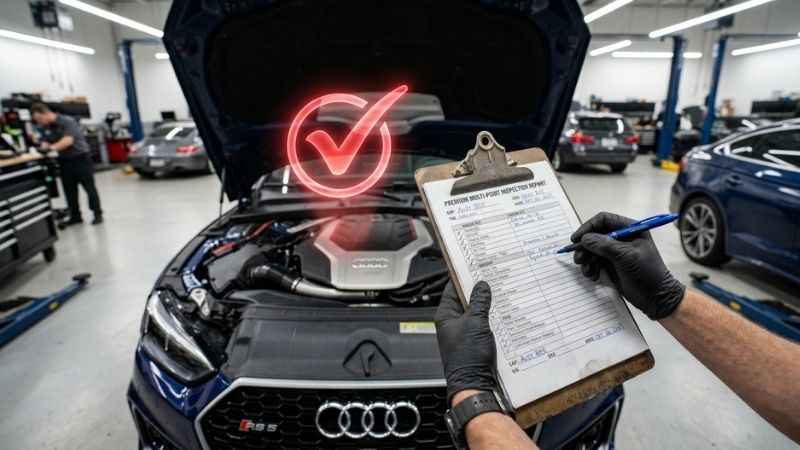
A CPO car is a used vehicle that has met a specific inspection and condition standard set by an automaker or dealer. These cars are not new, but they usually come with extra checks and a limited warranty that regular used cars do not have. Rules and benefits differ by automaker and dealer.
What usually makes a vehicle eligible for CPO
Automakers set eligibility, inspection, reconditioning, and warranty rules for their CPO programs. While every brand sets its own limits, typical requirements include:
- Age limits based on model year
- Mileage caps to keep cars relatively fresh
- Programs commonly screen title and vehicle-history information and may exclude salvage, flood, lemon-law, or other branded-title vehicles; accident-history rules vary by program.
- Standard mechanical and cosmetic condition checks
What a CPO inspection does, and does not, tell you
Many CPO programs require a multi-point inspection covering specified mechanical, safety, cosmetic, and functional items, but the exact checklist and process vary by program. Vehicles may be reconditioned or repaired as needed to meet the applicable program’s standards; request the inspection and reconditioning records for the specific vehicle. This inspection lowers your risk, but it is not proof a car will never break down. Consider arranging an independent pre-purchase inspection, including for a CPO vehicle, if the seller permits it and the cost is justified by the purchase.
What a CPO warranty may include
A CPO program may include limited warranty coverage, but buyers should verify the coverage start date, duration, mileage limit, exclusions, deductible, administrator, and repair-location rules. It often combines any remaining original factory warranty with a special limited warranty. Some programs may include benefits such as roadside assistance; loaner or courtesy-vehicle availability is program- and dealer-specific and should be confirmed in writing. Read the actual contract because coverage periods, start dates, parts included, exclusions, deductibles, and repair rules differ by program.
CPO vs Used Car vs Dealer-Certified: What Is the Difference?
Comparison table
| Factor | Manufacturer-backed CPO | Dealer-certified used | Regular used car | Private-party used car |
| Who sets standards | The vehicle manufacturer | The individual car dealership | No formal standard | The current vehicle owner |
| Who pays/honors warranty | Covered repairs are typically performed through participating authorized dealers under the manufacturer’s or program administrator’s warranty terms | Dealer-certified vehicles may include dealer-backed coverage, a third-party service contract, remaining factory coverage, or no additional warranty; verify the written terms for the specific vehicle. | Usually none | None |
| Inspection documentation | A program inspection checklist may exist; ask the dealer for the completed vehicle-specific checklist and reconditioning records. | Varies by dealer | None required | None required |
| Eligibility rules | Manufacturer CPO programs typically set vehicle age/model-year and mileage eligibility criteria, which vary by brand | Flexible dealer rules | None | None |
| Repair location | Covered repairs may be available through participating authorized dealers; verify the repair-network and geographic coverage terms in the specific CPO warranty | Selling dealer or partner shops | Any mechanic | Any mechanic |
| Typical price position | CPO vehicles often carry a premium relative to similar non-CPO vehicles, but actual prices vary by vehicle, market, condition, warranty, and seller | Moderate used price | Lower market price | Lowest price |
| Buyer verification priority | Verify factory backing | Read third-party contract | Full mechanical check | Verify title and history |
Why dealer-certified is not automatically the same as CPO
An automaker-supported CPO program provides standardized inspection rules and warranty service at any authorized brand dealership. Dealer-certified is not necessarily the same as a manufacturer CPO program. Ask who sets the standards, whether a written warranty is included, who administers it, and where covered repairs can be performed. Always ask if the warranty is backed by the factory or just the local dealer.
CPO disadvantages to consider
CPO cars cost more than ordinary used cars. Some warranties have exclusions, deductibles, maintenance conditions, or coverage limits that buyers should review in the written contract. Depending on the program, coverage may run from the vehicle’s original in-service date or from the CPO retail sale date; verify the exact start and end dates in the warranty contract. Certification cannot erase a car model’s underlying reliability pattern. CPO inventory may be more limited than the broader used-car market because only eligible vehicles can enter a given certification program.
Is a Certified Pre-Owned Car Worth It?
When paying more for CPO can make sense
A CPO premium may be worthwhile when the written coverage is meaningful for the buyer’s ownership period and the premium is reasonable relative to comparable non-CPO vehicles and likely repair risk. It works well if the car has strong reliability ratings and fits your daily needs. The price bump should be small compared to identical non-CPO cars on the market. It is also useful if you want dealer network support and peace of mind during your first years of ownership.
When a normal used car may be the better value
A normal used car is a better choice if the CPO price markup is too high. Skip CPO if the warranty has heavy exclusions or short time limits. A standard used vehicle may have a lower upfront price, but compare the total expected cost, condition, warranty coverage, inspection findings, and financing before deciding. This approach lets you keep cash in reserve to pay for any future repairs yourself.
A five-step CPO value test
- Find comparable non-CPO vehicles with a similar year, trim, mileage, condition, and location.
- Calculate the exact dollar difference for the CPO price premium.
- Read the actual warranty contract to see what is covered and what is excluded.
- Estimate the financial value of the warranty and extra services during your planned ownership period.
- Compare the vehicle history, safety recalls, and independent inspection findings before making a final choice.
How to Verify a CPO Vehicle Before You Buy
Documents to request
- Manufacturer CPO certificate or official program confirmation
- Ask whether the dealer can provide the vehicle-specific CPO inspection checklist and records of completed reconditioning; availability and format vary by program.
- Reconditioning and repair invoice records
- Written warranty booklet and full contract terms
- Request a reputable vehicle-history report and review the title, odometer, accident/damage, service, and ownership information it contains; confirm critical details through title/VIN records where available.
- Request the VIN and check it for unresolved safety recalls through the manufacturer or the applicable government recall database.
- Proof of any remaining original factory coverage
Questions to ask the seller
- Is this a manufacturer-backed CPO vehicle or a dealer-certified car?
- Who administers and honors this warranty policy?
- When does the warranty coverage start and end?
- What specific parts are excluded, and is there a repair deductible?
- Can any franchised dealer perform covered repairs under this program?
- What exact repairs were completed to pass certification?
- Has the vehicle had any accident or flood damage, salvage/rebuilt or other branded-title history, odometer discrepancy, lemon-law/buyback designation, or other material history issue?
- Can I take this car to an independent mechanic for a pre-purchase inspection?
The final independent checks
Take the car for a long test drive on highways and city streets. Pay for an independent mechanic inspection to catch hidden flaws. Use the VIN to check for open safety recalls, then confirm remedy status with an authorized dealer or manufacturer records when necessary. Confirm the title history is clean and compare financing rates before signing any purchase paperwork.
CPO Meaning in Business: Product, People, and Procurement
Chief Product Officer
A Chief Product Officer is typically the senior product executive responsible for setting and executing product vision and strategy; the role’s scope and reporting structure vary by organization. A CPO commonly leads product management and may oversee or partner closely with design, research, engineering, marketing, and analytics teams, depending on the company. They ensure what the company builds matches customer needs and business goals. Scope, reporting lines, and titles like Head of Product vary by company stage and sector.

CPO vs CEO vs CTO vs VP of Product
| Role | Primary accountability | Typical focus | Key partners |
| Chief Product Officer (CPO) | Product vision and roadmap | Market fit, user needs, and product features | CEO, CTO, and marketing |
| Chief Executive Officer (CEO) | A CEO generally leads overall organizational strategy and executive direction, with responsibilities varying by company size, ownership structure, and sector. | Strategy, funding, and team leadership | Board of directors and executives |
| Chief Technology Officer (CTO) | A CTO typically leads or shapes technology strategy and architecture; responsibility for infrastructure, engineering, security, and innovation varies by organization. | Software architecture, engineering, and security | Product and engineering teams |
| VP of Product | A VP of Product commonly leads product teams and product execution, with the strategic scope relative to a CPO varying by company. | Team management, sprints, and product delivery | Product managers and designers |
Chief People Officer and Chief Procurement Officer
A Chief People Officer manages talent, workplace culture, employee experience, and human resources strategy. A Chief Procurement Officer manages global sourcing, supplier relationships, supply chain costs, and vendor contracts. Both roles are typically senior leadership positions, but their reporting lines and authority vary by organization.
Other Common CPO Meanings
Chief Petty Officer
Chief Petty Officer is a senior enlisted rank (E-7) in the U.S. Navy and U.S. Coast Guard. These leaders guide junior sailors and manage technical operations aboard ships and stations.
Commodity Pool Operator
A Commodity Pool Operator is an individual or organization that operates a commodity pool and solicits or receives funds for trading in commodity interests, such as futures, options, or swaps. In the United States, many CPOs must register with the CFTC and become NFA members, unless an exemption or exclusion applies.
Chief Privacy Officer
A Chief Privacy Officer is a corporate executive who manages data protection, privacy laws, and customer information security. A Chief Privacy Officer commonly oversees privacy strategy, data-governance practices, and privacy-compliance efforts; responsibilities may overlap with legal, security, and data-governance teams.
Charge Point Operator
A Charge Point Operator is an organization that operates EV charging infrastructure and may also own, install, maintain, manage access to, or bill for charging stations, depending on the market and business model. They manage power delivery and billing systems for drivers.
Close Protection Officer and Central Police Office
A Close Protection Officer is a trained security professional who protects high-risk individuals from threats. Punjab Police uses CPO to refer to its Central Police Office. In other police systems, the acronym and office name may differ.
Frequently Asked Questions About CPO
Does CPO mean a car is accident-free?
No, CPO status does not guarantee a clean history. CPO status does not necessarily prove a vehicle is accident-free. Accident and damage-history eligibility varies by manufacturer and program, so review the vehicle-history report and program terms. Always check a vehicle history report before buying.
Does a CPO warranty start when I buy the vehicle?
It depends on the program rules. Coverage timing varies. Confirm whether original factory coverage runs from the original in-service date and whether any separate CPO coverage begins at certification, retail sale, or another defined date. Read the fine print to be sure.
Is a CPO vehicle the same as a new vehicle?
No, a CPO car is still a used vehicle. Even though it goes through multi-point inspections and repairs, it has previous wear and tear from earlier owners.
Is CPO higher than CEO?
No, A CPO often reports to the CEO or another senior executive, but reporting structures vary by organization. Executive team structures vary, but the CEO holds the highest leadership rank in a company.
Is a Chief Product Officer the same as a Head of Product?
Sometimes in practice, but their scope and seniority vary by company. Head of Product and Chief Product Officer titles are not standardized. Their seniority, scope, and reporting relationships vary by organization; a CPO is not necessarily a member of the board of directors.
What does CPO mean in HR?
It usually means Chief People Officer. A Chief People Officer typically leads an organization’s people or HR strategy, often including talent, culture, employee experience, and employee-relations functions.
What does CPO mean in the Navy?
It means Chief Petty Officer. Chief Petty Officer is a senior enlisted rank. CPOs commonly provide leadership, mentorship, and technical supervision, with duties varying by assignment.
On a car listing, CPO usually means Certified Pre-Owned, but you must verify whether the certification and warranty are truly manufacturer-backed. In a company, check the department after the word “Chief” before inferring job duties. Acronyms are only helpful when you match them to the correct industry context.
You May Also Like:
RCTA Meaning: Rear Cross Traffic Alert in Cars vs. TikTok Slang
MSO Meaning: Healthcare, Vehicle Titles, and Other Common Definitions

Joseph Quinn is the founder and editor of Punspa, a technology-focused website covering technology, website reviews, internet terms, and other things worth figuring out online. He writes and edits the site’s technology and web content, with a focus on clear, useful explanations. He also enjoys humor and wordplay, which occasionally leads him to write a pun-related article just for the fun of it.